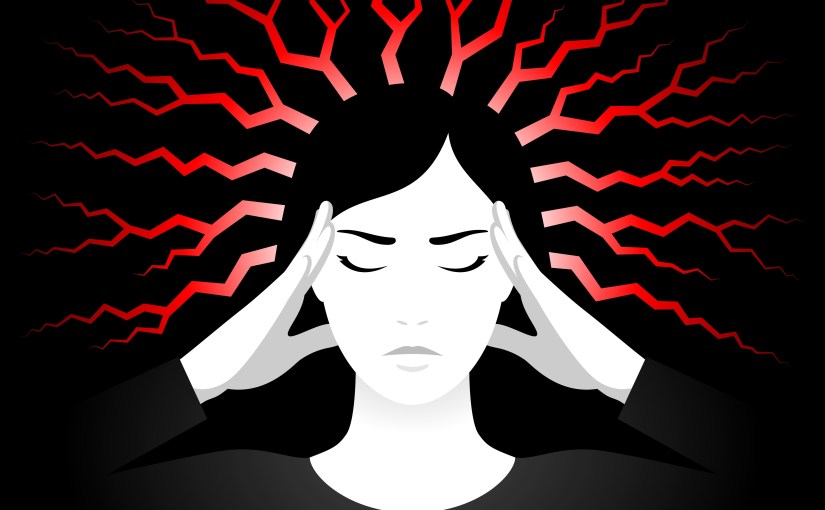
Anxiety, gratitude, mindfulness, and autism

Anxiety is commonly associated with stress or worry, but for someone who is autistic, what looks like anxiety can be because of our unique sensory and cognitive experiences. A key to understanding the differences in anxiety between neurodivergent (autistic) and neurotypical is understanding the source of the “anxiety”. What appears as anxiety to the external observer may not be what is being experienced by the neurodivergent person.

As I only have autism, what I write about here are my autistic experiences and understanding. ADHD and anxiety is a whole ‘nother thing.

One common piece of neurotypical advice about anxiety is to do meditation, practice mindfulness and gratitude (I’ll call this “wellness practice” for the rest of this post.)

Maybe. What appears as anxiety in autistic people may be a sensory overload, a meltdown, a shut-down, or stimming. For me, in any of those states, meditation could actually be harmful.

Sensory overloads

Autistic sensory processing is very different to neurotypical sensory processing. From a biological perspective, the shapes and wiring in an autistic brain can be very different. What is nothing to a neurotypical person, like a loud motorbike stopped alongside at the traffic lights, can be painful to an autistic person. The volume, the frequency of the noise, the pitch – yes, we hear with our ears, but autistic sensory neurons process it differently. It may be painful for an autistic person.

Any of the senses can be skewed. Something we see, hear, taste, smell or touch may be very bad, or very good. But it won’t be neurotypical normal. Here’s some more detail.

Tactile Sensory Seeking: This involves seeking out tactile sensations such as touching, rubbing, or feeling different textures. Individuals may enjoy touching specific objects or surfaces, or they may seek deep pressure sensations by hugging or pressing against objects. At the other end of the tactile sensory spectrum, tactile sensations could be highly distressing, such as tags and seams on clothing.

Visual Sensory Seeking: Some individuals with autism may be drawn to visual stimuli and seek out bright lights, spinning objects, or visually stimulating patterns. They may engage in repetitive visual behaviours like staring at moving objects or watching spinning objects. At the other end of the visual sensory spectrum, what an autistic person sees could be highly distressing, such as flashing lights.

Auditory Sensory Seeking: This involves seeking out auditory stimuli such as loud noises, music, or specific sounds. Some individuals may enjoy listening to music at a high volume or repeatedly making loud vocalizations. At the other end of the auditory sensory spectrum, sounds could be highly distressing, such as unexpected loud noise.

Vestibular Sensory Seeking: This relates to seeking movement and vestibular input. Individuals may enjoy activities like swinging, spinning, jumping, or rocking back and forth to experience movement-related sensory input. At the other end of the vestibular sensory spectrum, movement sensations could be highly distressing, such as being held still in a hug.

Proprioceptive Sensory Seeking: Proprioception refers to the sense of body position and movement. Some individuals with autism may seek proprioceptive input by engaging in activities that provide deep pressure or joint compression, such as squeezing into tight spaces or carrying heavy objects. At the other end of the proprioceptive sensory spectrum, some body positions and movements sensations could be highly distressing, like hugs.

Olfactory and Gustatory Sensory Seeking: This involves seeking out specific smells or tastes. Individuals may have strong preferences for certain foods based on their sensory characteristics or may enjoy smelling or tasting non-food items. At the other end of the scent and taste sensory spectrum, these sensations could be highly distressing, such as squishy food textures, vinegar smells or even odours from outside the immediate environment.

For me, and my touch sensory issues, I cannot stand the feel of flannelette sheets, flannel shirts, or fleecy lined tracksuits.  So as an adult, I don’t buy them. As a child though, I was extremely uncomfortable. If mother sent me to school in tracksuit pants, I would put a skirt in my school bag, and change on the bus. What might seem to be defiance was actually a sensory issue.

So, imagine your sensory experience causing distress. That distress might present as anxiety, such as stimming by walking in circles or flapping hands to help self-regulate. Wellness practices won’t help them. Removing the sensory triggers will help, such as smuggling a skirt to wear instead of the fleece lined tracksuit pants that made my legs feel like itchy jelly.

An autistic meltdown, to the undiagnosed, might look and feel like an anxiety attack. I know, now, that that was certainly the case for me. But it’s actually a response to sensory overstimulation that cannot be stopped. And that sensory overstimulation may be internal. Wellness practice will not help. It may even add to the inner turmoil.

Meditation

When it comes to meditation, I cannot stand the sound of waves. Guided meditation is sensory hell, just another voice inside my head. Not to mention, it took me 40 years to be able to tolerate breathing out through my mouth. You know how it goes – in through the nose, out through the mouth.  I have a severe sensory aversion to mouth breathing.  These days, I can do it, but my go to is Theta wave meditation, wordless, and where breathwork doesn’t matter.

Gratitude and mindfulness

Practising gratitude and mindfulness is possible for me, and I do practice it. But it is hard to be truly grateful when the autistic experience may be one of bias, discrimination and pain. I am grateful for so many things. Yet I rage and storm at bias and discrimination and unconscious ableism, the systematic ableism. At least I am grateful for hyperlexia, so I can rage and storm in a coherent and cogent way. A positive way to do this is to focus on the things you can control, even though, with a dynamic disability such as autism, what you can control changes from day to day.

Then, for some autistic people, there’s aphantasia; the inability to visualise. Imagine being asked to … see a tree. with aphantasia, you simply cannot visualise a tree. Doing guided meditation with aphantasia is an exercise in futility and could trigger Rejection Sensitivity Dysphoria. That’s crippling when you feel judged and rejected by yourself.

Theta wave meditation and sleep

Theta waves are between 4hz and 8hz. That’s taking about brain cycles, not hearing.  That’s way too low for human hearing. 

In typical sleep, you have four stages in a 90-minute cycle.

Stage 1 – light sleep, around 5-10 minutes, features hypnagogic “dreams,” with brain frequencies cycling down from 8-12hz alpha waves to 4-8hz theta waves.

Stage 2 – deeper sleep, around 20 minutes, brain frequencies cycling down to 4-8hz theta waves, and the start of a few deep, slow 0.5-4hz delta waves.

Stage 3 – deepest sleep, around 20-20 minutes, with brain frequencies staying mostly down in 0.5-4hz. If you wake up during this part of sleep, you generally feel disoriented, groggy and generally discombobulated.

Then the sleep stages go back through stage 2, the stage 1, with brain cycles increasing from 0.5-4hz delta cycles to 4-8hz theta cycles to 8-12hz alpha cycles. This gets the brain ready for REM – rapid eye movement – the dreaming sleep.

It’s a slightly different experience for autistic people, though.  Our brains typically don’t cycle down as low in each stage of sleep, so we may not get the deep sleep that a neurotypical person might.

Consider this, then.  If autistic people, like me, don’t get as good a sleep as non-autistic people, not getting all the benefits of a good, deep sleep, we are already behind the eight ball in being alert, ready and resilient. Being in chronic sleep deficit results in a plethora of health issues, including being permanently in the sympathetic nervous system, a permanent state of fight/flight/fawn/freeze. This then has effects on inflammation, heart health and the gut.

Are there any solutions?

Maybe. For me, personally, music helps me get to sleep, and a no-blue, red light helps me sleep better.

I have also mastered the art of the 10-minute nap.

What music?

Chakras, by Tony O’Connor

Missa da beata virgine, composed by Josquin, performed The Tallis Scholars.

Any theta track by Guenther Goerg, on the Insight Timer app.

Why red light?

Red light may help because it has a lesser impact on melatonin than blue light.  It cycles at a lower frequency and may be more calming. It may improve sleep quality during sleep.

I’ve gone back to having a night light on all night, a red one with no blue light in its colour spectrum. Whether it’s the placebo effect, or if it actually does improve sleep quality, I feel more rested in the morning with the red light night than without it.

Wrapping up

Anxiety is a neurotypical thing that affects neurotypical people, and meditation, gratitude and mindfulness may help with that.

What looks like anxiety in autistic people can come from a different place, such as sensory issues, and meditation, gratitude and mindfulness may not help with that, and could even be traumatising.

Even something as a fundamental as sleep is different for autistic people, potentially leaving us in a state of chronic sleep deprivation. Our “rest and repair” time isn’t as good.

So please, don’t make assumptions about what is causing “anxiety” for a person. Talk to us, ask us.

We have enough to deal with without a sensory overload being made worse.

Autism in the workplace

Trigger warning – mention of suicidal ideation

Read with caution, and rest assured, the events described were back in 2011 and 2018. I’m ok. I really am OK. Cash poor but spiritually rich, and OK

For all of my 31 years in the paid workforce, I had no idea I had no idea I was autistic. I had no idea that my sensitivity to sound was an autistic sensory issue. I had no idea that rejection sensitivity disorder had me in its grip, making me fragile, or as one person put it, “you can dish it, but you can’t take it”. Did I mention that autistic people sometimes have communication issues, and that’s its not constant?

In my last 11 years, as a senior manager dealing with occupational health and safety,  environmental management, quality assurance and corporate governance, I had no idea I was autistic.

How might my professional life have been different, if I had known I was autistic? Could supports and accommodations have been put in place?

That’s really hard to say, or imagine. Not much was known about autism, and it was believed that Aspergers was a different disorder.

But in my last professional role, things were showing, even though I was undiagnosed. Looking back, with hindsight and new knowledge, I can see my autism peeking through my carefully constructed facade.

The challengesRSD

Rejection sensitivity dysphoria (RSD) made professional life, well, interesting. Going through recruitment processes and not being offered a role. Once in a role, 1 month, 3 month and 5 month probation reviews. Then the annual performance appraisal process. All those little points upon which anxiety and RSD can bloom. And if I felt something was unjust, my strong sense of justice directed my words.

But RSD, from two separate instances at work, I now know to be the origin to be the origin of the two suicidal ideation episodes in my life.

The first one, feeling unwanted, that my work was tolerated but really unnecessary, set off the RSD in a spiral that only hyperempathy saved me from. What would it do to co-workers, driving back from the same meeting I had left earlier, if they saw my distinctive car wrapped around a bridge pylon. That was what stopped me. Hyperempathy. My autistic traits saved my life.

The second time was being given what I thought was a direction but was not, at least, not a direction for immediate implementation. So I forged ahead, made mistakes and the ensuing conversation about that set the RSD off and running again, all the way to suicidal ideation by way of a home-made toxic substance. Reiki, and a skilled, talented and generally all round wonderful Reiki healer, caught that one and opened doorways for me that I could give voice to my distress. That time, I ended up on Zoloft, and it was awful.

The Challenges – sensory

Then we can talk about sensory issues. With my audio sensitivities, having my own music playing was essential. So I became the DJ for the office. But the uninvited noise from an open plan office was, shall we say, uncomfortable. Several times I asked about moving into an empty office, and was refused. Several times, I would be walking back into the office to be met with what sounded like a wall of sound, with people on the phone, conversations, office machines… but all I would do was take a deep breath and continue walking through to my desk in the open plan office.

When I did get an office, sharing with my off-sider, the peace and silence was magnificent yet almost unnerving. The server room next door provided white noise, that I didn’t know I needed, but now makes sense.

That’s not anxiety, that’s an autistic meltdown

Then there was the offsite company meeting in the function room in a hotel, where lunch was in the hotel bistro. I walked into the bistro, then walked out again. I called it an anxiety attack, but now I know it was an autistic meltdown, a meltdown from the noise I walked into, but also RSD from not seeing a reserved seat for me.

But wait, there’s more

All the while,  during this period, I had a husband in the mid to end stages of Huntington’s Disease. Small wonder I went down with hypothyroidism from the chronic stress and also with oestrogen dominance, resulting in fibroids. Too much testosterone, my parasympathetic nervous system overloaded and operating from the sympathetic nervous system, in constant fight or flight. And with undiagnosed autism.

From my experience in risk management and risk mitigation, how then could diagnosed autism, and appropriate accommodations, made a difference?

If my manager and the next manager above that had known about RSD, what would have changed in terms of performance appraisals and performance management?

If my manager had known that my auditory sensitivities were actually austic auditory sensitivities, would the office have been offered sooner?

If my manager had known of my need for clear communication, instructions and directions, what would have changed?

And yet, my autism made me good at my job, at inspections, audits and investigations. Checklists, forms, guidance on inspections. Audit consultations, completion and reports. Emergency management and communications, problem solving, troubleshooting, then reviewing how we had done. My attention to detail, my planning, almost to a project management level of detail; my autistic traits made me good at my job.

That was then, this is now

These days, self-employed as a rideshare driver, I control my workplace. Temperature, noise, what’s playing on the radio, or Spotify. Which booking requests I accept. And seeing so many regulars, the same people, day by day, week by week, establishing relationships with my regulars. My workspace, tailored for me. And every day I have my itinerary.


Autism in the workplace, Amaze Australia

In 2018, Amaze Australia conducted research into community attitudes & and behaviours towards autism.

https://www.amaze.org.au/creating-change/research/employment/.

This is what they found, that:

  • The unemployment rate for autistic people is 31.6% – three times the rate of people with a disability and almost six times the rate of people without a disability.
  • 45% of autistic people who are employed report that their skills are higher than required to do their job.
  • 20% of people report having lost their job because of their autism.
  • More than half of autistic people who had held a paid job have been out of employment for three or more years

That’s an awful lot of wasted talent. How could your workplace be more inclusive?

RSD, PDA and sensory seeking

In this post,  I’d like you to take a walk with me.  Engage your imagination, then engage your empathy and open your mind to possibility and potential.

Imagine this scenario.  Two pre-teen girls, the best of friends, having a sleepover. Or, close to midnight, not sleeping but having a snack and ceaseless chatter behind a closed bedroom door.

They hear bumps and thumps, and one girl yells out to her younger brother to stop being creepy and to stop eavesdropping.

On hearing this,  the younger brother bursts into the room, limping with a moonboot on his right foot. He trips on a bag left by the door, and falls on to the floor, arms reaching out to break his fall.

One girl screams, thinking he was reaching for her. This brings Mum to the bedroom door, where she sees her son on the floor, raging, and her daughter and her daughter’s best friend, huddled on the bed, as far away from the boy as they can get.

Mum tells the girls to go into the lounge room, and they dart around the boy to get out of the bedroom.

Mum leaves the boy where he is, to wear himself out, and brings the girls’ bags out to them, suggesting that the friend’s dad could come and get them, to continue the sleepover at her home. The friend is nearly hysterical, thinking she had nearly been attacked.

Her dad arrives and both girls race out to his car.

The boy has gotten himself up and appears in the lounge room just as the front door closes behind the door. He is shouting and swearing, words unintelligible as they run together in his agitation, and he is hitting his head with his hands and stamping on the floor with his moonboot.


It’s a stark scenario, isn’t it? So let’s add that the mum and the daughter have ADHD, and the boy has autism. How does your perspective of this scenario change?

Could the timbre, pitch, tone and volume of the girls’ chatter have triggered sensory issues for the boy?

Could the closed door have triggered rejection sensitivity dysphoria (RSD) for the boy?

Could the closed door have triggered pathological demand avoidance (PDA) for the boy?

What sensory seeking issues are present in behaviour involving the moonboot, such as stamping the foot and the possible aggravation of  injury that required the moonboot for the boy?

What do his mum and his sister understand about their autistic son and brother?

What do his mum and sister understand about their own ADHD?

At the age of 11, what does the girl experience if she has RSD and is experiencing the desire to fit in with her friends and deal with peer pressure?

What does the girls’ departure do for the boy’s RSD?

What if we have a family that is a single, widowed mum with ADHD, diagnosed when her daughter was diagnosed,  with two neurodivergent children, working full-time, managing her grief,  a full time job to support her family, and self-managing three NDIS accounts?

It’s a stark scenario, whichever way you look at it.

Autism doesn’t end on 30 April, the end of Autism Awareness Month. Autism awareness, just like autism, is a 24/7 issue for families and friends or autistic people, just like it is for autistic people themselves, adults and children

How do you, or how can you, support the autistic people in your life?


Footnote, courtesy of ChatGPT:

RSD is primarily associated with intense emotional reactions to perceived rejection or criticism. People with RSD might be hypersensitive to social cues and might overreact to situations where they feel criticized or judged, even if the criticism is not intended or is minor.

PDA is characterized by an extreme aversion to demands and expectations. Individuals with PDA often resist and avoid tasks or requests, sometimes to an extent that significantly impacts their daily functioning. This behavior is typically not driven by fear of rejection but rather a need to maintain control and autonomy.

Sensory seeking traits in autism refer to behaviors and preferences where individuals actively seek out or crave sensory input in various ways. These sensory seeking behaviors are part of the broader sensory processing differences commonly observed in individuals with autism spectrum disorder (ASD).

Here are some common sensory seeking traits in autism:

Tactile Sensory Seeking: This involves seeking out tactile sensations such as touching, rubbing, or feeling different textures. Individuals may enjoy touching specific objects or surfaces, or they may seek deep pressure sensations by hugging or pressing against objects.

Visual Sensory Seeking: Some individuals with autism may be drawn to visual stimuli and seek out bright lights, spinning objects, or visually stimulating patterns. They may engage in repetitive visual behaviors like staring at moving objects or watching spinning objects.

Auditory Sensory Seeking: This involves seeking out auditory stimuli such as loud noises, music, or specific sounds. Some individuals may enjoy listening to music at a high volume or repeatedly making loud vocalizations.

Vestibular Sensory Seeking: This relates to seeking movement and vestibular input. Individuals may enjoy activities like swinging, spinning, jumping, or rocking back and forth to experience movement-related sensory input.

Proprioceptive Sensory Seeking: Proprioception refers to the sense of body position and movement. Some individuals with autism may seek proprioceptive input by engaging in activities that provide deep pressure or joint compression, such as squeezing into tight spaces or carrying heavy objects.

Olfactory and Gustatory Sensory Seeking: This involves seeking out specific smells or tastes. Individuals may have strong preferences for certain foods based on their sensory characteristics or may enjoy smelling or tasting non-food items.These sensory seeking traits can vary widely among individuals with autism and may change over time or in different environments.

Understanding and addressing these sensory needs and preferences are essential in creating supportive environments and developing effective interventions to help individuals with autism thrive and engage more comfortably in daily activities.