Bibliophile to the rescue!

Eric Van Lustbader, aikido, and self.

In a previous post, I wrote about the clean start, the reset, for my workroom and bedroom.  Now the challenge is to keep that momentum going.

In my 20s, all the way back in the 1990s, I discovered Eric van Lustbader’s Nicholas Linnear novels. I was hooked. The beguiling mix of Eastern mysticism, Western pragmatism, martial arts, the corporate shenanigans, the violence; I was besotted.

Addictive personality or autistic special interest – the heartbreak of self-deprivation
One of the things that breaks my heart, that makes me grieve for my younger self, is how I denied myself things. Things, like van Lustbader’s books, because they were enthralling. I used them as a launching board to find out about so many things, including aikido. But even though they were books that I wanted to read again and again, I denied myself, because I was afraid I had an addictive personality. In reality, all I had was undiagnosed autism, and a new-found special interest.

You see, while addictive personality is not a disorder under the DSM-5-TR, it is generally used to describe a compulsive need to engage in certain behaviours or with certain substances. On the surface, that can look a lot like an autistic special interest, and an autistic special interest can look a lot like an addiction to a thing, or a compulsion.

So, imagine my confusion and dilemma, when I didn’t know I was autistic, and found things that were special interests. Imagine the autistic need, the desire, to go down that rabbit hole, and misdiagnosing yourself, from your teenage years as potentially having an addictive personality. Imagine containing yourself, depriving yourself of that joy, because you thought you may have had a mental health disorder.

One of my autistic traits is hyperlexia, a deep fascination with words and language, that often presents as early acquisition of reading and written words. I’m also a bibliophile to go with that. Books have always been my best friends. Rediscovering an old friend, hidden on a bookshelf, is a rare delight. But the books I have denied myself, because I thought I had an addictive personality… such as Dungeons and Dragons and the spinoff Dragon Lance, and Margeret Weis’s “Star of the Guardian” series. These are just the ones that have come up in conversation recently. There would be tens, hundreds of books that I read once, found utterly delightful and enthralling, that I put aside because I thought I had an addictive personality.

Part of me rages, now, and grieves, for those books that could have been lifelong special interests, maybe a missed genesis for writing fan fiction, maybe a missed opportunity to research the issues present in the books, acquiring more knowledge… so much missed that could have been so rich and satisfying.

Fast forward to today, restarts and maintenance
In thinking, though, about my issues with executive allofunction (my positive language, instead of using “dys”), and the fresh clean start of my revived workroom and bedroom, I remembered some of the principles of aikido. Dusty memories of those books by Eric van Lustbader and his character Nicholas Linnear, and the things I learned from the books about martial arts, and then went on to research.

One of those things from those books was aikido – avoid and deflect. In a lightbulb moment, I realised that that is how I could manage my executive allofunction; by avoiding and deflecting. Now, it may sound crazy to talk about managing my mind as if it’s a third party. I know it isn’t; it’s just me. It is, though, almost doing an end run around myself, or rather, knowing where the blocks are, and doing an end run around them. Avoid, and deflect.

How?
How does this work for me? Follow my mental path. This is going to be like a braid, several strands woven together and coming together at the end.

Thread 1. My good-as-brand-new workroom, I need to keep it that way. So if I also use it as my workout area, as well as my study and writing area, my collectables in display cabinets, and my sewing equipment temporarily put aside… then if I move those desks from being back to back, to being against the wall, then I have room for my exercise bike and Nordic walker. And the newly cleared drawers in the display cabinets can hold my yoga gear. Then there’s a space there for a yoga mat, and a space there for dumbbells… well, if I’m going to use that part of the room as a workout area, then I need to keep the chaise clear for a post workout transition. And given that one of my workout routines includes prone shoulder abductions, I want a clean carpet.

So cleaning isn’t a function in and of itself. It is an adjunct to my workout routines.

Thread 2. Why are workout routines so important? They’re important because I discovered I am autistic, and autism isn’t just the mind, it is the body as well. Now, I’m 52, and don’t have the “chunky” movements that some autistic people have, likely because of the “inadvertent supports” I received as a child, in ballet, speech and drama, piano and singing, and cycling, and walking and showing dogs.

However, some 60% or more of autistic people are also hypermobile. (Waving hello.) Yes, that’s me. I have hypermobile knees and hands. I’m researching the concept of “masked” hypermobility at the moment, as it may be possible that the chronic muscle tension I have is not necessarily all from the stresses of my life, but is masked hypermobility. Have my muscles tensed to stabilise hypermobile joints? That theory makes sense when I recall the time I dislocated T3 (the third vertebrae in the thoracic section of the spine) inwards. My osteopath was really scratching his head over how I did it, and how to get it back into its proper place so I could breathe properly again. My workout routines are to stabilise joints through the muscles around them. Hence, workout routines.

Thread 3. My financial situation already tells me that I’ll be renting for the rest of my life. (Because I spent nearly $300,0-00 on my late husband’s care, over and above his pension and the NDIS – Huntington’s Disease is expensive.) So, I have a plan that my retirement life will be peripatetic, calling to my ancient Romany DNA; van life, roaming around Australia. That will need strength, fitness, mobility and agility. I figure I’ve got 18 years to get ready for that. Hence, workout routines.

Thread 4. Sewing. Another special interest. But I don’t have any of my homemade garments in my wardrobe right now, because they don’t fit me at the moment. Weight loss isn’t the goal. Getting back into those dresses and skirts and blouses – that’s the goal. Hence, workout routines.

Bring all those threads together into my daily workout routines that I need to keep my workroom clean and tidy for. Avoid and deflect. I’m not cleaning. I’m making my workouts possible. Avoid the PDA, the RSD, the overwhelmed autistic freeze, the need for a body double. Avoid and deflect.

My daily workout routines – now on my fourth week.
Monday – knees and shoulders – toe raises, walking backwards, dynamic lunges, toe raises to heel lifts, static lunges, shoulder stretches, and twists

Tuesday – shoulders and arms – bent arm lateral raises, bicep curls, reverse bicep curls, hammer bicep curls, triceps curls, external and internal shoulder rotations, prone horizonal abductions, and prone lower arm raises. These have progressed from 500g weights to 2.5kg dumbbells, with sets increasing from 5 to 2 x 10.

Wednesday – hips – hip abductions, prone side leg lefts, cat/cow, hip adductions, high-kneed marching on the spot, and butterfly pose.

Thursday – core, all yoga poses – cat/cow, upward/downward dog, dead bugs, boat pose, half table pose, twisting boat, side bends, child pose.

Friday – yin yoga hip openers – sleep swan, butterfly, cat/cow, half butterfly, and a repeating flow from cat/cow to child to frog, back to child, then cat/cow

Saturday – whole of body strength – push-ups, split level lunges, squats, overhead presses, walking lunges, bent over dumbbell rows.

Sunday – gentle whole of body stretches. – marching in place, side steps, toe tape, and seated hamstring and quad stretches, seated calf and shin stretches, seated upper back and chest stretches, seated ankle rotations, wide legged forward bend, standing to raise to heel raise flow, shoulder rolls, and the weighted hula for some fun.


This is why I have been saying lately that my autism diagnosis has given me a new lease on life.
Health AND Safety

Workplace health and safety. Occupational health and safety. Or in the current legislative framework,  work health and safety.

So many people think of physical risks when it comes to health and safety at work . Slips,  trips and falls.  But the elements of health and safety that are seen in the public eye are about health.

Silicosis? Health.  Asbestosis, mesothelioma. Health.  Lead poisoning.  Health.

Too often, mental health is only considered as a secondary injury. This is typically when an injured worker has been off work for several week. They may develop a secondary condition, such as depression as a side effect of their injury.

Bullying and harassment can cause mental injury. It is one of many psychosocial risks present in a workplace. Violence, whether from colleagues or members of the public. Employers have obligations about all risks to health safety, physical and mental.

Psychosocial risks, those risks to mental health can include such things as:

  • Job demands that are too high or too low – unreasonably busy and exceeding an employee’s capacity, or monotonous work.
  • Low job control – micromanaging, not allowing employees any input, or little input, into how the work is done, or scheduled, and little input into objectives and targets.
  • Poor support – no or inadequate training and supervision, day to day support and leadership, inadequate tools, resources and information to do the job.
  • Low role clarity – frequently changing work assignments and procedures, conflicts in scheduling and expectations.
  • Poor organisational change management – where change is poorly planned, communicated, managed or supported.
  • Low reward and recognition – where the employee may perceive an imbalance in effort vs recognition, either formally or informally.
  • Poor organisational justice – little or no transparency about how are issues are managed, investigated and communicatdd, and little consideration for dignity or respect.
  • Poor workplace relationships and conflict – from rudeness to disagreements and to ostracism and exclusion.
  • Remote or isolated work – this could be location, time or nature of the work, such as night shift workers or surveyors on remote sites.
  • Poor environmental conditions – when workplace conditions are unpleasant, in poor condition, physically hazardous, of hazardous nature, and could trigger a stress response.
  • Traumatic events – experiencing, investigating, reading, witnessing or hearing about, for example, armed robberies, assaults, fatal vehicle accidents. This could also include intentional cruelty.
  • Violence and aggression- where an employee could be abused, threatened or assaulted, and could be instigated by co-workers, customers, patients, clients or visitors.
  • Bullying
  • Harassment, including sexual harassment.
  • Fatigue.

The “Managing the risk of psychosocial hazards at work Code of Practice 2022” is the “gold standard” guide on how to prevent harm from psychosocial risks.

So how might that look?

Imagine that you manage a team of accountants at head office. One of those accountants is newly diagnosed, and requests supports and accommodations. Refusing those supports and accommodations, other team members making disparaging remarks, and the person suddenly being excluded from team lunches or outings, and a reduction in workload complexity without consultation could well cause psychosocial harm to that team member.

Or, say you have an internal auditor visiting a branch office. No desk space has been provided,  documents are not available and the auditor’s requests are ignored. The auditor is then threatened about making a complaint.

Or, say a female worker has just had a miscarriage, and she is ordered to work from home when she is ready to come back to work, because management don’t want her grief upsetting morale at the office. She then hears a snide remark about “keeping her legs closed” after a Teams meeting was not quite disconnected.

Why care about these things? Because the law says so. Persons in control of a business or undertaking (PCBUs) directors, designers of structures, officers and individuals all have obligations under health and safety legislation.

So once again, the call is to be kind, fair, transparent, and act with integrity. Know your obligations under law as an employer, and comply with obligations under the Work Health and Safety Act 2011 (Qld) or the relevant legislation in your jurisdiction.

Why is autism different between the sexes?

I have 51 years of lived experience as an undiagnosed autistic woman. Yes, I have special interests, not one, but many. Yes, I have stims, heavily internalised and minimised. Yes, I have sensory issues for sound, touch, smell, and taste. Yes, I have ARFID. Yes, my anxiety attacks were actually autistic meltdowns. Yes, my bad temper is rooted in PDA. Yes, my empathy is hyperempathy. Yes, my gift with words is hyperlexia, from childhood. Yes, my use of forms and checklists in my former career in occupational health and safety played to the autistic desire for routines. Yes, my former career in occupational health and safety is rooted in the autistic sense of justice. Yet, I went undiagnosed for 51 years due to high levels of masking and assimilation.

Why? Differences in brains between sexes could explain it. We already have a different brain from the neurotypical brain, so why not between the sexes?

Why? Because autism typically presents differently the sexes.

Why? Because the diagnostic criteria are based on the typical presentation of one gender.


Research indicates that the brains of autistic women differ from those of autistic men.  (Craig et al, 2007).

In 2007, Craig et al. conducted a study to examine regional grey-matter and white-matter differences in the brains of women with autism spectrum disorder (ASD). Using MRI, they found significant differences between the brains of 14 autistic women and 19 autistic men.”

They found, through MRI, that the brains of the 14 autistic women differed significantly from the 19 control images from autistic men.

In 2021, Floris et al. identified sex differences in the intrinsic brain function of individuals with autism, particularly in dorsolateral occipital interhemispheric interactions. These findings were robust across different data processing methods and replicated in larger independent samples.

In 2022, Supekar et al. conducted a study to identify functional brain organization markers that distinguish between females and males with ASD and predict symptom severity. They found that females with ASD exhibit a functional brain organization significantly different from that of males with ASD. Additionally, they identified specific functional brain features that differentiate females from males with ASD

These findings suggest the need for different diagnostic criteria for women and girls with autism, as their brain structures and functions differ significantly from those of autistic males. Currently, much of the existing research and diagnostic criteria are based on studies of men and boys with autism, which may not adequately capture the presentation of autism in females.”.

Tony Attwood, a renowned psychologist specializing in autism, has developed several assessment tools specifically designed for diagnosing autistic girls and women. These include a modified version of the QG-ASC for adult women.

There is a pressing need for the authors of the DSM-5-TR to recognize and incorporate these sex differences in the diagnostic criteria for autism, ensuring more accurate diagnoses for women and girls..

  • Craig, M.C., Zaman, S.H., Daly, E.M., Cutter, W.J., Robertson, D.M., Hallahan, B., … & Murphy, D.G. (2007). Women with autistic-spectrum disorder: magnetic resonance imaging study of brain anatomy. British Journal of Psychiatry, 191(3), 224-228. doi: 10.1192/bjp.bp.106.034603.
  • Floris, D.L., Filho, J.O.A., Lai, M.C., et al. (2021). Towards robust and replicable sex differences in the intrinsic brain function of autism. Molecular Autism, 12(1), 19. https://doi.org/10.1186/s13229-021-00415-z
  • Supekar, K., de los Angeles, C., Ryali, S., Cao, K., Ma, T., & Menon, V. (2022). Deep learning identifies robust gender differences in functional brain organization and their dissociable links to clinical symptoms in autism. The British Journal of Psychiatry, 220(4), 202-209. doi: 10.1192/bjp.2022.13

“We apologise for this interruption to regular programming”

What is the “regular programming” that I’m referring to? That would be our autonomic system. In this post,  we’ll look at the autonomic system and  it’s “children”, the parasympathetic nervous and the sympathetic nervous system, and of course, some personal stories.  But first,  the science.

Our autonomic nervous system controls involuntary functions like heart rate, digestion, and breathing. It’s divided into the sympathetic (fight or flight) and parasympathetic (rest and digest) branches.

The parasympathetic nervous system is responsible for our rest and digestion processes. It’s often referred to as the “rest and digest” system and it contrasts with the sympathetic nervous system, which activates our fight or flight response.

Think of it this way. Parasympathetic – you are cruising down the highway, windows down, music blaring, someone special in the passenger seat. The sun is shining and it’s a glorious day.

Sympathetic – a semi-trailer jack-knifes in front of you. The sympathetic nervous system activates with a adrenalin and cortisol to prepare you for battle with the demon truck that threatens your life. You are in “fight or flight” mode, your concentration is super acute, your blood circulation has been altered to prime your muscles with oxygen-rich blood. You turn your car down a side road, heading well away from that semi-trailer, and you and your passenger are safe.

You feel shaky, and maybe a little teary. Your heart is racing. The sympathetic state is still in play.

When it’s “situation normal”, the sympathetic state stands down, and the parasympathetic state comes back online, repairing, healing and reinstating calm.

So what actually happens in the body in a “fight or flight” response (also known as an adrenal response)?

Fight or flight – the adrenal response

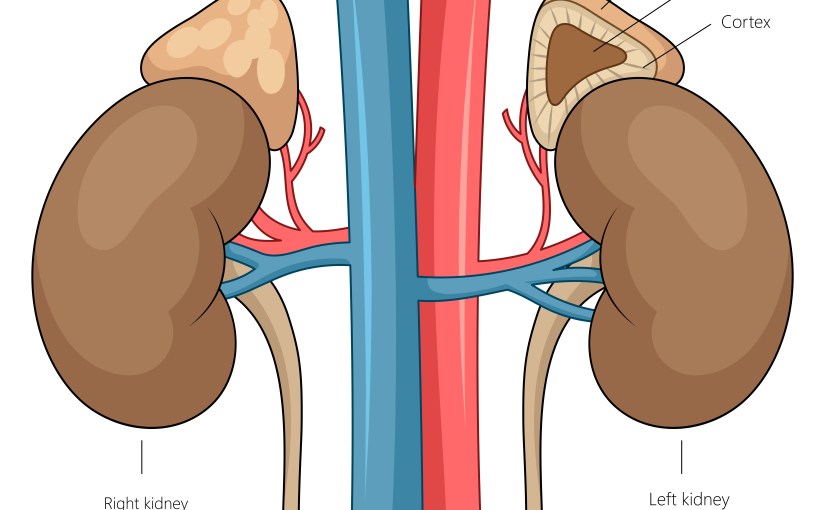
The physiological processes in an adrenal response, also known as the fight or flight response, involve intricate interactions between the brain, nervous system, and adrenal glands. Here’s a breakdown of the key steps:

  1. Perception of Threat: The process starts with the brain perceiving a threat or danger. This perception can be triggered by various stimuli, such as a loud noise, a sudden movement, or an emotional stressor.

2. Activation of the Sympathetic Nervous System: Upon perceiving a threat, the brain sends signals to the adrenal glands via the sympathetic nervous system. The sympathetic nervous system is responsible for the body’s rapid response to stress, activating various physiological mechanisms to prepare for action.

3. Release of Stress Hormones: In response to sympathetic activation, the adrenal glands release stress hormones, primarily adrenaline (epinephrine) and noradrenaline (norepinephrine), into the bloodstream. These hormones act as chemical messengers that prepare the body for immediate physical activity.

4. Effects on the Body: The release of adrenaline and noradrenaline triggers several physiological changes throughout the body:

  • Increased Heart Rate and Blood Pressure: Adrenaline causes the heart to beat faster and stronger, leading to increased blood flow and oxygen delivery to muscles and vital organs.
  • Dilation of Airways: Airways in the lungs dilate, allowing for increased airflow and better oxygen exchange.
  • Blood Sugar Elevation: Adrenaline stimulates the liver to release stored glucose (glycogen) into the bloodstream, providing a rapid energy source for muscles.
  • Enhanced Mental Alertness: Noradrenaline increases alertness, concentration, and focus, preparing the individual to assess and respond to the threat efficiently.
  • Suppression of Non-Essential Functions: During the adrenal response, non-essential functions such as digestion, immune response, and reproductive processes are temporarily suppressed to prioritize resources for immediate survival needs.

5. Activation of the Hypothalamic-Pituitary-Adrenal (HPA) Axis: In addition to the rapid response mediated by adrenaline and noradrenaline, the hypothalamic-pituitary-adrenal (HPA) axis may also be activated. This involves the release of cortisol, another stress hormone, which helps sustain the body’s response to stress over a more extended period.

6. Resolution and Recovery: Once the perceived threat diminishes or resolves, the parasympathetic nervous system, often called the “rest and digest” system, becomes dominant again. This shift allows the body to return to its baseline state, gradually reducing heart rate, blood pressure, and other stress responses.

When stress is chronic, your sympathetic nervous system stays in control. Too much adrenalin from “fight or flight” puts your cortisol out of whack and you end up in chronic stress and inflammation. You can’t get of the sympathetic state, you can’t get back into the parasympathetic state, to allow healing,  rest and digestion to get back to normal.

Chronic stress and inflammation can have a significant impact on your overall health and wellbeing. How does it do that?

Cortisol and Chronic Inflammation

Immune System Modulation: Cortisol has immunosuppressive effects, meaning it can dampen the activity of certain components of the immune system. While this is beneficial in acute stress situations to prevent excessive immune reactions, chronic suppression of immune function can lead to a weakened ability to combat infections and control inflammation.

Inflammatory Pathway Activation: Cortisol can also modulate the activity of inflammatory pathways in the body. In situations of chronic stress, prolonged elevation of cortisol can lead to the upregulation of pro-inflammatory cytokines (molecules involved in the immune response) and downregulation of anti-inflammatory cytokines. This imbalance can promote a state of chronic low-grade inflammation.

Insulin Resistance: Chronic elevation of cortisol levels can contribute to insulin resistance, a condition where cells become less responsive to insulin. Insulin resistance is associated with inflammation, particularly in adipose (fat) tissue, where immune cells release pro-inflammatory substances.

Impact on Gut Health: Cortisol can affect gut health by altering the composition of gut microbiota and increasing intestinal permeability (leaky gut). Changes in gut microbiota and increased gut permeability can lead to immune system activation and chronic low-grade inflammation in the gut and systemic circulation.

Oxidative Stress: Prolonged stress and elevated cortisol levels can also increase oxidative stress in the body. Oxidative stress occurs when there is an imbalance between the production of reactive oxygen species (ROS) and the body’s ability to neutralize them with antioxidants. Excessive ROS can damage cells and tissues, contributing to inflammation and various chronic health conditions.

Behavioral Factors: Chronic stress and elevated cortisol levels can influence lifestyle factors such as sleep disturbances, poor dietary choices, reduced physical activity, and increased substance use (e.g., smoking, alcohol), all of which can independently contribute to inflammation.

Now, all that is for the neurotypical brain. What is different for the allotypical brain?

(Allotypical is the autism affirming term I came up with – “other normal”. I’m only five months in from discovering my autism, and I’m already so frustrated with “dys” this and “dis” that, and references to deficits. So – new words.)

Autism and the Adrenal Response

Think back to the paragraphs about the adrenal response, and the first point – “The process starts with the brain perceiving a threat or danger. This perception can be triggered by various stimuli, such as a loud noise, a sudden movement, or an emotional stressor.”Autistic people experience the world differently. There are some who posit that a meltdown is a sensory storm, and there are those who take it further, describing a meltdown as an autonomic storm. The result? Our physical experience of the world may well have us in the parasympathetic state more often than not.

So, how do we get out of the sympathetic and into the parasympathetic state?

In the ’tism social media landscape, somatic therapy is a current trend, and it’s something old hippies and witches like me know very well.  Crystal singing bowls, bells, mantra songs, restorative yoga, vagus breathing. The physical tricks such as tilting your head back to look at the sky, then rolling your eyes up to your forehead,  then relaxing back down again. And for autistic people, that might also include stimming or weighted blankets.

Everyone who knows about this somatic stuff has their own technique that they prefer. For me, newly discovered autistic, the tools I used in the past for what I thought were anxiety attacks, still hold true  because in truth, I was already dealing with autistic meltdowns. You may prefer to consult your GP, psychologist or psychiatrist. I’m not telling you what to do. I’m telling you what I do.

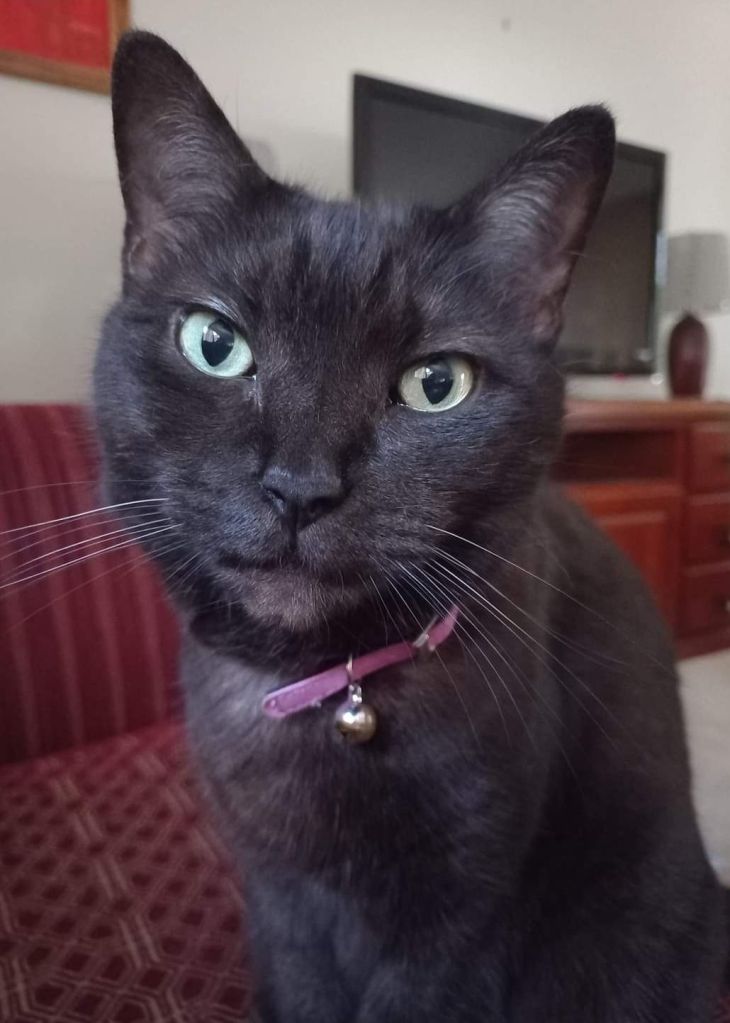
My personal remedies? My cat, Maya, and her purrs. Vagus breathing. Sung, moving mantras. Music from Tony O’Connor, Sacred Earth and XTC. And diving back into a favourite book.

If you want peer-reviewed papers for this stuff, I’ll get them for you. But for me, what I know is enough, and I know what works for me.

And that is what sees a return to regular programming.

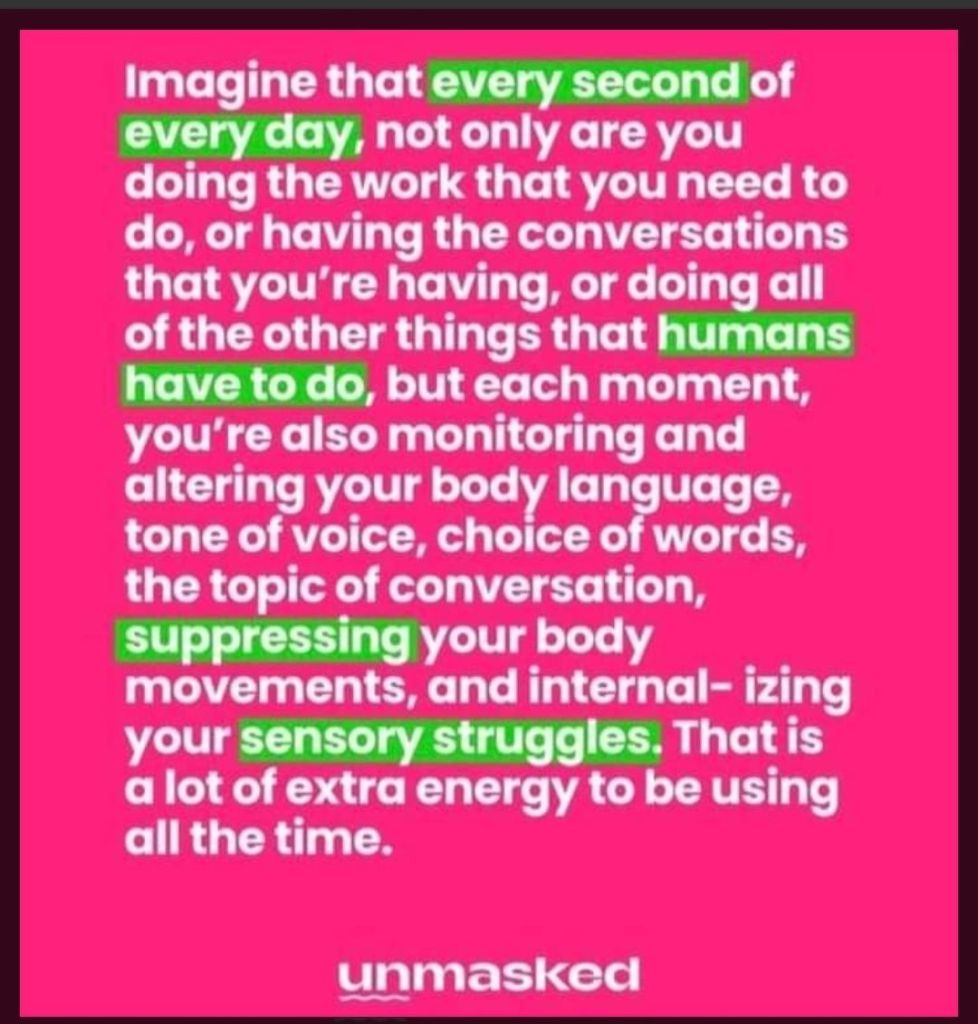
Short but on point

Courtesy of “unmasked”

This makes me realise the magnitude of what I’ve been dealing with for my 51 years of highly masked, undiagnosed autism.

I shared it with a friend, who said, “I am glad that you find solace and validation in the quote. It truly is a striking representation of the daily struggles faced by many individuals on the autism spectrum.”

Truer words were never spoken.

Warning – rage ahead

For all the women who think that they are aliens in this world, I see you.

For all the girls who think they are worthless because they can’t write an essay at school, I see you.

For all the undiagnosed autistic women and girls, I see you. I was you. And I rage and grieve for you.

Yes, we didn’t know then what we know now. Except Temple Grandin was diagnosed when she was 3 years old in 1950. Her mother fought to keep Temple out of an institution.

Which makes me wonder how many women with undiagnosed autism were lobotomised in the 1930s to make them more biddable? We’ll never know.

How many girls and women are misdiagnosed with schizophrenia, when in fact they are undiagnosed autistic?

How many girls and women are misdiagnosed with bipolar disorder, when in fact they are undiagnosed autistic?

How many girls and women are misdiagnosed with borderline personality disorder, when in fact they ate undiagnosed autistic?

How many girls are handicapped by their parents who refuse to get their daughter assessed for autism?

How many  girls are handicapped by their parents who refuse to tell their daughter that she is autistic?

How many women are preyed upon because they are undiagnosed autistic and have no defence against manipulative people?

How many women? When will this disparity end?

What could have been, if it was recognised that there is a female autism phenotype in the 1950s? What could my life have been like, if I had been diagnosed at 3 years of age, like Temple Grandin? What if I had been given support? What might have been changed? I’ll never know.

But when I see these undiagnoses, misdiagnoses, and secret diagnoses, I wonder – what have we learned in the last 70 years about women’s health? Why is there still a predilection to diagnose us all with anxiety, or hormonal issues when we seek medical help? Why are we diagnosed with major illnesses 4 years later than men, on average?

Why is half of the population so ignored, maligned, and disadvantaged? Why do we keep carrying the same mistakes forward from generation to generation?

Yes, I have rage. And I have grief, for all the girls, all the women, who don’t get the support they need.

I have rage for the  psychiatrist who attempted to dissuade me from seeking an autism assessment “because it will be an unremovable label for the rest of your life.”

Autism already is for life. It doesn’t go away. Label or not, I’m autistic. As are all the undiagnosed and misdiagnosed women and girls out there.

I see you. I hear you. I know you.

Autism in the workplace

Trigger warning – mention of suicidal ideation

Read with caution, and rest assured, the events described were back in 2011 and 2018. I’m ok. I really am OK. Cash poor but spiritually rich, and OK

For all of my 31 years in the paid workforce, I had no idea I had no idea I was autistic. I had no idea that my sensitivity to sound was an autistic sensory issue. I had no idea that rejection sensitivity disorder had me in its grip, making me fragile, or as one person put it, “you can dish it, but you can’t take it”. Did I mention that autistic people sometimes have communication issues, and that’s its not constant?

In my last 11 years, as a senior manager dealing with occupational health and safety,  environmental management, quality assurance and corporate governance, I had no idea I was autistic.

How might my professional life have been different, if I had known I was autistic? Could supports and accommodations have been put in place?

That’s really hard to say, or imagine. Not much was known about autism, and it was believed that Aspergers was a different disorder.

But in my last professional role, things were showing, even though I was undiagnosed. Looking back, with hindsight and new knowledge, I can see my autism peeking through my carefully constructed facade.

The challengesRSD

Rejection sensitivity dysphoria (RSD) made professional life, well, interesting. Going through recruitment processes and not being offered a role. Once in a role, 1 month, 3 month and 5 month probation reviews. Then the annual performance appraisal process. All those little points upon which anxiety and RSD can bloom. And if I felt something was unjust, my strong sense of justice directed my words.

But RSD, from two separate instances at work, I now know to be the origin to be the origin of the two suicidal ideation episodes in my life.

The first one, feeling unwanted, that my work was tolerated but really unnecessary, set off the RSD in a spiral that only hyperempathy saved me from. What would it do to co-workers, driving back from the same meeting I had left earlier, if they saw my distinctive car wrapped around a bridge pylon. That was what stopped me. Hyperempathy. My autistic traits saved my life.

The second time was being given what I thought was a direction but was not, at least, not a direction for immediate implementation. So I forged ahead, made mistakes and the ensuing conversation about that set the RSD off and running again, all the way to suicidal ideation by way of a home-made toxic substance. Reiki, and a skilled, talented and generally all round wonderful Reiki healer, caught that one and opened doorways for me that I could give voice to my distress. That time, I ended up on Zoloft, and it was awful.

The Challenges – sensory

Then we can talk about sensory issues. With my audio sensitivities, having my own music playing was essential. So I became the DJ for the office. But the uninvited noise from an open plan office was, shall we say, uncomfortable. Several times I asked about moving into an empty office, and was refused. Several times, I would be walking back into the office to be met with what sounded like a wall of sound, with people on the phone, conversations, office machines… but all I would do was take a deep breath and continue walking through to my desk in the open plan office.

When I did get an office, sharing with my off-sider, the peace and silence was magnificent yet almost unnerving. The server room next door provided white noise, that I didn’t know I needed, but now makes sense.

That’s not anxiety, that’s an autistic meltdown

Then there was the offsite company meeting in the function room in a hotel, where lunch was in the hotel bistro. I walked into the bistro, then walked out again. I called it an anxiety attack, but now I know it was an autistic meltdown, a meltdown from the noise I walked into, but also RSD from not seeing a reserved seat for me.

But wait, there’s more

All the while,  during this period, I had a husband in the mid to end stages of Huntington’s Disease. Small wonder I went down with hypothyroidism from the chronic stress and also with oestrogen dominance, resulting in fibroids. Too much testosterone, my parasympathetic nervous system overloaded and operating from the sympathetic nervous system, in constant fight or flight. And with undiagnosed autism.

From my experience in risk management and risk mitigation, how then could diagnosed autism, and appropriate accommodations, made a difference?

If my manager and the next manager above that had known about RSD, what would have changed in terms of performance appraisals and performance management?

If my manager had known that my auditory sensitivities were actually austic auditory sensitivities, would the office have been offered sooner?

If my manager had known of my need for clear communication, instructions and directions, what would have changed?

And yet, my autism made me good at my job, at inspections, audits and investigations. Checklists, forms, guidance on inspections. Audit consultations, completion and reports. Emergency management and communications, problem solving, troubleshooting, then reviewing how we had done. My attention to detail, my planning, almost to a project management level of detail; my autistic traits made me good at my job.

That was then, this is now

These days, self-employed as a rideshare driver, I control my workplace. Temperature, noise, what’s playing on the radio, or Spotify. Which booking requests I accept. And seeing so many regulars, the same people, day by day, week by week, establishing relationships with my regulars. My workspace, tailored for me. And every day I have my itinerary.


Autism in the workplace, Amaze Australia

In 2018, Amaze Australia conducted research into community attitudes & and behaviours towards autism.

https://www.amaze.org.au/creating-change/research/employment/.

This is what they found, that:

  • The unemployment rate for autistic people is 31.6% – three times the rate of people with a disability and almost six times the rate of people without a disability.
  • 45% of autistic people who are employed report that their skills are higher than required to do their job.
  • 20% of people report having lost their job because of their autism.
  • More than half of autistic people who had held a paid job have been out of employment for three or more years

That’s an awful lot of wasted talent. How could your workplace be more inclusive?

Autism, creativity and integration of self

This morning, I was stumped. I had no idea what to write about.  I asked a friend, who suggested I write about autism and creativity. I had a couple of moments of introspection and thought,  along these lines.

I don’t know what my autistic creativity is.

Then the thought.As I said, I don

Yes, you do. You’ve been autistic your whole life,  so every creative thought you’ve had or done has been your autistic creativity.

Well, damn,  mike drop for the inner voice again..

I have a number of regular passengers who are autistic,  and their creativity,  around their special interests,  is amazing.

The teenager focussed on game design.

The teenager focussed on music production.

The young woman writing parodies of songs with a theme of Australia and conservation.

But me, and my creativity? Remember, I’m (now) 52 years old, and discovered my autism late last year. And all my life, I have never thought of myself as creative. Yet, I write, I cook,  I have gardened, and I crochet, among other things. While I was unknowingly autistic.

My writing? All my life. I won my first writing competition at the local eisteddfod, when I was 7. It was a story about a lizard who had lost his tail.

My cooking? All my life, from my first three-course meal when I was 8, to so many lunch and dinner parties, to now, in my meal prepping, where I am combatting of regression after autistic burnout. This meal prepping is creating tasty, budget friendly meals for my breakfasts and lunches. I’m looking at recipes and taking inspiration from them, creating meals tailored to me, my allergies and my budget.

Breakfasts such as frittata, omelette wraps, LSA bread with almond spread and sliced bananas, oat bakes with berries and chocolate, apple and cinnamon fritters, a baked rice pudding. Lunches such as chicken and loaded coleslaw, lentil and sweet potato salad, green salad with meatballs, green salad with crocodile, a dhal-like “hail mary”, pumpkin and salmon pasta bake. All for less than $4 per serve, using what I have in my pantry and freezer, like the crocodile meat. That got an overnight marinade in yoghurt mixed with my hot spice mix, with the heat coming from mustard and ginger, and a slow, low roast. My nightshade allergy rules out potatoes, tomatoes, chilli, and capsicum (peppers).

My gardening? Lost to depression and what I now know to be autistic burnout from a few years ago. But, oh, the gardens. Vegetables and flowers, all mixed in with companion planting. Heritage yellow tomatoes and luscious San Marzano (roma) tomatoes, not trellised but lying,  lazy, on a bed of oregano, with chives, allyssum and marigolds in and around, given afternoon shade by a towering blue plumbago.

Sweet potatoes grown in a big bin, with the first monster weighing in at 1.2kgs. Pineapples, grown from a crown, such a beautiful, strappy, architectural plant during its slow growth.

Lettuces and rocket (arugula), salad greens, coriander (cilantro), beans, peas and sweet peas, aloe vera, and herbs – parsley, sage, rosemary and thyme… and lavender, curry plant, marjoram, lemon verbena, lemon balm, and so much more. I collected thyme, sage and mint varieties. Have you ever tasted a lemon thyme,a pineapple sage or an apple mint? And my beloved, and sorely missed, dwarf alstroemeria, and my miniature roses.

Oh, my roses. Dead from my depressed neglect. The miniature Black Jade, such a deep, luscious red. The miniature Irrestible, creamy white with a faint clove scent. The miniature Little Sunset, a harlequin of pinks, reds and yellows. The miniature Moon River, delicate pink with a vivacious, outrageous scent for its size. Beautiful little roses with a flower head the size of a 50c piece.

Their empty, barren pots and planters reproach me, every day.

With a creative hat on, and tried and true techniques, the food scraps from my meal prepping go into brown paper bags, what I think of as “compost bags”. These get buried at the bottom of a plant pot, then the soil is replenished with supplements of dried, matured manure, trace elements, blood and bone, powdered eggshells, and Seamungus, an organic pellet fertiliser. By the time these pots have matured soil that won’t burn delicate little roots, I’ll have a newfangled Bluetooth connected water timer tap, and little irrigation lines run to those pots, and then it’s time for planting.

Alyssum and coriander, to bring the pollinators. Wormwood, to keep the possums away. Chard and kale, in the right season, for folate, perpetual spinach, radish, salad greens, parsley, mint, nasturtiums, spring onions. All in pots on the kitchen verandah.

The bins, then, to be rejuvenated, for sweet potatoes.

Then there also the big raised cyprus planter boxes, 600mm  x 600mm – four of them. Once rejuvenated, maybe another pineapple, maybe an aloe vera, maybe a wildflower seed mix. These are exposed to full sun, so these plants must be very hardy, and well catered.

That’s my plan, the creation of my new garden, food and flowers.

And all planned in a spreadsheet, of course. This is my autism. Plant, weeks to harvest,  aerial plants and root plants alternating season by season, what’s in which pot with what companion plants, watering needs, nutrition needs.

Autistic creativity takes many forms.

What does your creativity look like?

The Forde Inquiry and the forgotten, adoption and genetic inheritance

(or, how I got to be me)

This is the story of my biological parents and my genetic inheritance. First, though, some background on “the forgotten” – those who were thrown into orphanages and detention centres and… forgotten – including my biological parents.

In June 1999, the report of the Commission of Inquiry into Abuse of Children in Queensland Institutions was tabled in the Queensland Parliament.

It covered the period from 1911 to 1999, examining records from more than 150 orphanages and detention centres, and evidence given by more than 300 people. The Commission of Inquiry found significant evidence of abuse and neglect of children in the past. (https://fordefoundation.org.au/resources/the-forde-inquiry/)

What was not investigated, because it was not in the terms of reference of the Forde Inquiry, was the forgotten who were put into psychiatric wards because of their behaviour.

Imagine this. In 1971, in a psychiatric hospital in southern Queensland, two patients in their 20s met, fell in love, pledged themselves to each other, and conceived a child. Once her pregnancy was discovered by hospital staff, he was transferred to another facility, the Challinor Centre, in south-east Queensland, while she remained in the same psychiatric hospital, Bailey Henderson, alone, having had her love ripped away from her. Her pregnancy developed, and on 5 April, 1972, she gave birth to baby girl.

Within two weeks, that infant had been removed from her mother, transferred to
the Warialda home in Brisbane, and prepared for fostering and adoption. Her mother remained at the hospital, now having had two loves ripped away from her.
Two lovers, forcibly separated, and an infant in an unknown location, being given to someone else.

All hope was lost.

That is the story of my biological parents, and me. It continues.


In 2003, I searched for,  and found, both my biological mother and father.

In 2004, my biological mother and father saw each other for the first time in 33 years.

In 2005, they married.

In 2024, the lovers are separated once more, with him in a secure nursing home with dementia of the Alzheimers type, and her,  with emotional and physical frailty, in a different nursing home.

Underlying this, like a discordant threnody, lies the falsehoods that saw the mother and father
institutionalised while very young.

She went in before the age of 10, with borderline schizophrenia.

He went in at 11, with schizophrenia and borderline mental retardation. They both got out of the system, and to this day, are not on medication for schizophrenia, indicating they never had the condition in the first place.

In the mid-20th century, especially during the 1940s and 1950s, there was a significant lack of understanding and knowledge about autism. Many children who today would be recognized as autistic were often misdiagnosed or misunderstood. Terms like “borderline mental retardation” and “childhood schizophrenia” were commonly used to describe behaviors and conditions that we now recognize as part of the autism spectrum.

So it’s entirely possible that both of my biological parents are neurodivergent, with either ADHD, autism, or both. My biological father was surrendered as a ward of the state by his parents, and what is described of his behaviour matches a PDA response. My biological mother was a quiet, reserved child, often “away with the fairies”, detested by her adopted mother, and was committed to the psychiatric hospital by her adoptive parents. That sounds an awful lot like the inattentive ADHD type.

In the “pick up sticks” process of meiosis, when DNA from both parents is jumbled and shuffled to create the zygote that then becomes an embryo, which then becomes  a foetus, and then becomes a baby, it was almost a dead certainty that their child, me, would be neurodivergent; autistic, in fact.

Experts posit that autism is a combination of genetic and environmental factors. Environmental factors would include whatever drugs she was taking in that hospital, both before and after they knew she was pregnant. There wouldn’t have been a folate supplement, or any of the things that are recommended for intending and expectant mothers today.

Research into and knowledge about autism has come a long way since then, but mostly relevant only for five year old white boys. The gaps in knowledge about autism and girls, autism and ethnicity,  and autism and aging are still wide, and the DSM-5-TR diagnosis criteria are still looking at the male  presentation of autism.

All we can do is keep speaking up, advocating, participating in research and making the most of every single day. Autism is more than Autism Awareness Day, Week or Month. Autism is for life.

Executive dysfunction – my way

For 45+ years, I have been castigated, and self-castigated, for my inability to keep my room/ rooms/ desk/ home clean and tidy. That’s how my executive dysfunction manifests. I may have periods of a special interest where I can do a cleaning spree, but then it will fall back to executive dysfunction.

What does a sporadic special interest in cleaning look like? It’s when I know the chemistry and delight in making my own products,  using my knowledge of kitchen chemistry and aromatherapy.  It’s when I take base produce,  unscented,  and use aromatherapy to give them my signature scent,  or maybe a specific essential blend for a specific situation, such as mould.

Otherwise,  however,  my personal brand of executive dysfunction combined with object permanence means untidiness and clutter. Internalised ableism from a lifetime of masking and pretending to be what I was not creates a cruel inner voice.

This is the damage of undiagnosed autism. Parents remonstrate, real estate property managers write bad reports and managers down grade your annual performance appraisal.

So how am I going to deal with it? Like this.  I have four polypropylene shopping bags,  2 black,  2 white.  Each one has been labelled – upstairs,  downstairs,  rubbish,  recyclables. And with a timer set for 20 minutes,  pick a pile of shame and go for 20 minutes, filling those bags up.  After 20 minutes,  stop.  Go and deal with the contents of the bags. Throw stuff into the correct bin,  take stuff upstairs or downstairs, where it needs to go. Wash hands,  have a glass of water,  and that’s one little bit done.

I’ve beaten back executive dysfunction in my cooking.  Now it’s time to triumph with my executive dysfunction and set routines to help me be a better,  autistic,  me.