They Say I Shouldn’t Be Here: Redefining Longevity on My Own Terms

🕯️ A Note Before the Next Poem

Science by ChatGPT. Emotions by me.

This isn’t a poem. It’s a rupture.
A palate cleanser between verses, with another poem; one not part of the Chiaroscuro Anthology, but one born of topical rage.
A reckoning that interrupts the flow.

On 5 April, I turn 53.
According to the statistics, I shouldn’t expect to live much longer.
This post is for every autistic woman who was erased by research, sidelined by medicine, or written out of longevity science entirely.

It’s not pretty. But it’s mine. And it is the reason the poems exist.


Literature Review: Life Expectancy in Autistic Women by Support Level

Despite increasing awareness of autism across the lifespan, autistic women remain dramatically underrepresented in mortality research, especially when it comes to parsing outcomes by support level (Level 1 vs Level 3).

Key Study: DaWalt et al. (2019)

DaWalt and colleagues tracked 406 individuals with autism over 20 years. They found:

  • 6.4% died during the study.
  • Average age of death: 39 years.
  • Primary causes of death: cancer, heart disease, accidents, medication complications.
  • Strong predictors: low early social reciprocity, poor daily living skills.

This aligns with Hirvikoski et al. (2016):

  • Average life expectancy in autism: 54 years.
  • With intellectual disability: 40 years.
  • Suicide prominent, especially in higher-functioning autistic adults.

Other studies (Croen et al., Nicolaidis et al., Mouridsen et al.) reinforce:

  • Poor healthcare access.
  • High comorbidities.
  • Elevated all-cause mortality.

Autistic Women: Still Largely Ignored

  • Late diagnosis → prolonged trauma exposure.
  • Higher suicidality (Hull et al., 2020).
  • More likely to mask, burnout, be misdiagnosed.
  • Hormonal & autoimmune issues often overlooked.

Estimated Life Expectancy

GroupEstimated Lifespan
Level 3 Autistic Women40–53 years
Level 1 Autistic Women60s–70s
General AU Women~83 years

Diagnostic History: Erased, Delayed, or Denied

Benchmarking Temple Grandin

Diagnosed in the 1950s at age 3—seven years after Kanner’s paper. Language-delayed. Visible. White. Middle-class. Rare.

Most women since:

  • Misdiagnosed: anxiety, BPD, depression.
  • Pathologised: controlling, dramatic, manipulative.
  • Dismissed: too smart, too intense, too sensitive.

Autism in DSM-III (1980), revised in DSM-IV (1994)—still male-centric. DSM-5 (2013): First real acknowledgment of a spectrum.

Impact:

  • Late diagnosis = prolonged harm.
  • No data = no funding.
  • No funding = no interventions.

What isn’t counted, doesn’t live as long.


David Sinclair and the Neurotypical Fantasy of Longevity

His Research

  • Sirtuins and resveratrol: longevity genes, debated effects.
  • NAD+ metabolism: energy, aging, DNA repair.
  • Epigenetic reprogramming: Yamanaka factors in mice, potential age reversal.

What’s Missing?

Neurodivergent people. Disabled bodies. Trauma physiology. Sensory systems.

He writes about longevity like everyone has the same nervous system. We don’t.


Blistering Insight: The Deadly Consequences of Exclusion

Meditation and RSD

“Close your eyes. Breathe deeply.” For autistic people with Rejection Sensitive Dysphoria (RSD), silence is where shame howls. Guided visualisation? Not with aphantasia. Mouth breathing? Sensory hell.

ARFID and Food “Rules”

Processed food = safety. Predictable texture. Tolerable taste. Forcing whole foods can induce panic, vomiting, shutdown. Feeding tubes? Sensory nightmare. Malnutrition? Real, deadly, unmeasured.

Exercise and Hypermobility

Generic “movement is medicine” ignores Hypermobility Spectrum Disorders (HSD). Injury risk, fatigue, overstretching—worsen outcomes if poorly understood.

Stress, Shutdown, Burnout

  • Autistic burnout: neurological, not just emotional.
  • Shutdown = disconnection, immobility, medical avoidance.
  • Stress leads to inflammation → telomere shortening → early death.

Citations: Hull et al. (2020), Autistica UK, multiple lived experience reports.

This is life-threatening omission masquerading as wellness.


The Human Cost

RSD and Ideation

Workplace fear wasn’t abstract. One mistake meant:

  • Job loss.
  • No income.
  • Loss of housing.
  • Loss of care home for my husband.

Indexed life insurance. No suicide clause. $820k. Twice, unmanaged RSD brought me to ideation. 

ARFID, Egg Whites, and Medical Trauma

Childhood: forced to eat egg whites. Backyard chickens. No escape. The trauma never left. I survived by becoming selective. Strict. Safe.

Talk Therapy as Adult ABA

“Reframe that.” “Breathe.” “Visualise peace.”

  • Mouth breathing = distress.
  • Silence = RSD.
  • Imagery = impossible with aphantasia.

Healing shouldn’t mean pretending to be neurotypical.


What Gets Left Out of the Longevity Conversation: Me

I’ve never done an annual check-up. Never had a pap smear or bowel screen. Never been hospitalised.

Why? Because I was never safe. Because no one knew I was autistic. Because every medical touchpoint reinforced trauma.

I live. I breathe. I do my best. And I am still here.


I Am Here: Redefining Longevity on My Own Terms

Not cold plunges. Not biohacking. Just this:

  • Sunday meal prep
  • Nesting tasks
  • Managing my nervous system
  • Rebuilding trust with my own body

Supplements and Supports

  • NAC
  • Curcumin BC95
  • Ginseng
  • Magnesium glycinate, threonate
  • Vitamin C
  • Nutritional yeast
  • Herbal liver and kidney support

HSD Awareness

  • HSD-aware osteopath
  • Movement adaptations
  • No more shame for “clumsiness”

Spitting in the Eye of Your Statistics

I am 53 this year. I am Level 1. My life expectancy? 67. The age I can access my super. How convenient.

Your stats say I won’t be here. So let me say it back:

I defy your statistics. I spit in their eye.


Lies, Lies and Damned Statistics: Lies of Longevity

By Lee-Anne Ford

Statistics. Lies, lies and statistics.
Damned statistics, they say.
Probabilities. Calculations.
Actuarial triumph in play.

Welcome to my life after death—
Actuarial calculations demand.
Welcome to my outrageous breath.
Statistics, my end, command.

Australian woman: expect average.
Life expectancy of eighty-three.
For near fifty years, I expected
Retirement plus fifteen, plus three.

But when love becomes anticipated grief—
Not the romantic, love born of chivalry,
But the love of caring, feared destitution,
Fated phone calls: will it this one be?

Sixteen years of what-if, how, when,
Acting typical when not—ASD unknown.
Do this, try that, be like, kowtow now,
When the ultimate curveball is thrown.

Widowed. Free. Long years and tears ahead—
The most stressful event in existence.
But when I say it like this, you hear that:
Not normal. Not like. Deviation resistance.

Expectancy—now it’s sixty-seven.
Tell me, please, what can I do?
Longevity tricks don’t work for me.
That’s every trick, not just a few.

Betrayed by society, research, and genes.
Autism: disordered, deviation from norm.
Some must wonder, crying, “Why?”
Why have you made me this reviled form?

Then woman. Women. Not little men—
But erased once, and now erased again.
Misogyny. Harassment. Abuse. That’s life.
Some want us invisible again. Their shame.

So: statistics. Lies². Damned statistics.
Actuarial calculations adjusted.
Autistic life expectancy: sixty-seven.
And wife of HD—twelve years, rusted.

Actuarial calculations complete.
Scratching heads. Flummoxed me.
Average expectancy now: fifty-five.
Yet this year, I turn fifty-three.

Not a case of thirty years to go.
But two. Just two. It’s clear.
My female actuarial value?
They say I won’t be here.

So: autistic rage and defiance.
I defy your actuarial rhyme.
I AM HERE. Changing the world—
One conversation at a time.


In the margins: naturopaths. Western herbal medicine. Reiki. Hot stone massage. They didn’t save my life. They helped me stay.
Why is autism different between the sexes?

I have 51 years of lived experience as an undiagnosed autistic woman. Yes, I have special interests, not one, but many. Yes, I have stims, heavily internalised and minimised. Yes, I have sensory issues for sound, touch, smell, and taste. Yes, I have ARFID. Yes, my anxiety attacks were actually autistic meltdowns. Yes, my bad temper is rooted in PDA. Yes, my empathy is hyperempathy. Yes, my gift with words is hyperlexia, from childhood. Yes, my use of forms and checklists in my former career in occupational health and safety played to the autistic desire for routines. Yes, my former career in occupational health and safety is rooted in the autistic sense of justice. Yet, I went undiagnosed for 51 years due to high levels of masking and assimilation.

Why? Differences in brains between sexes could explain it. We already have a different brain from the neurotypical brain, so why not between the sexes?

Why? Because autism typically presents differently the sexes.

Why? Because the diagnostic criteria are based on the typical presentation of one gender.


Research indicates that the brains of autistic women differ from those of autistic men.  (Craig et al, 2007).

In 2007, Craig et al. conducted a study to examine regional grey-matter and white-matter differences in the brains of women with autism spectrum disorder (ASD). Using MRI, they found significant differences between the brains of 14 autistic women and 19 autistic men.”

They found, through MRI, that the brains of the 14 autistic women differed significantly from the 19 control images from autistic men.

In 2021, Floris et al. identified sex differences in the intrinsic brain function of individuals with autism, particularly in dorsolateral occipital interhemispheric interactions. These findings were robust across different data processing methods and replicated in larger independent samples.

In 2022, Supekar et al. conducted a study to identify functional brain organization markers that distinguish between females and males with ASD and predict symptom severity. They found that females with ASD exhibit a functional brain organization significantly different from that of males with ASD. Additionally, they identified specific functional brain features that differentiate females from males with ASD

These findings suggest the need for different diagnostic criteria for women and girls with autism, as their brain structures and functions differ significantly from those of autistic males. Currently, much of the existing research and diagnostic criteria are based on studies of men and boys with autism, which may not adequately capture the presentation of autism in females.”.

Tony Attwood, a renowned psychologist specializing in autism, has developed several assessment tools specifically designed for diagnosing autistic girls and women. These include a modified version of the QG-ASC for adult women.

There is a pressing need for the authors of the DSM-5-TR to recognize and incorporate these sex differences in the diagnostic criteria for autism, ensuring more accurate diagnoses for women and girls..

  • Craig, M.C., Zaman, S.H., Daly, E.M., Cutter, W.J., Robertson, D.M., Hallahan, B., … & Murphy, D.G. (2007). Women with autistic-spectrum disorder: magnetic resonance imaging study of brain anatomy. British Journal of Psychiatry, 191(3), 224-228. doi: 10.1192/bjp.bp.106.034603.
  • Floris, D.L., Filho, J.O.A., Lai, M.C., et al. (2021). Towards robust and replicable sex differences in the intrinsic brain function of autism. Molecular Autism, 12(1), 19. https://doi.org/10.1186/s13229-021-00415-z
  • Supekar, K., de los Angeles, C., Ryali, S., Cao, K., Ma, T., & Menon, V. (2022). Deep learning identifies robust gender differences in functional brain organization and their dissociable links to clinical symptoms in autism. The British Journal of Psychiatry, 220(4), 202-209. doi: 10.1192/bjp.2022.13

Warning – rage ahead

For all the women who think that they are aliens in this world, I see you.

For all the girls who think they are worthless because they can’t write an essay at school, I see you.

For all the undiagnosed autistic women and girls, I see you. I was you. And I rage and grieve for you.

Yes, we didn’t know then what we know now. Except Temple Grandin was diagnosed when she was 3 years old in 1950. Her mother fought to keep Temple out of an institution.

Which makes me wonder how many women with undiagnosed autism were lobotomised in the 1930s to make them more biddable? We’ll never know.

How many girls and women are misdiagnosed with schizophrenia, when in fact they are undiagnosed autistic?

How many girls and women are misdiagnosed with bipolar disorder, when in fact they are undiagnosed autistic?

How many girls and women are misdiagnosed with borderline personality disorder, when in fact they ate undiagnosed autistic?

How many girls are handicapped by their parents who refuse to get their daughter assessed for autism?

How many  girls are handicapped by their parents who refuse to tell their daughter that she is autistic?

How many women are preyed upon because they are undiagnosed autistic and have no defence against manipulative people?

How many women? When will this disparity end?

What could have been, if it was recognised that there is a female autism phenotype in the 1950s? What could my life have been like, if I had been diagnosed at 3 years of age, like Temple Grandin? What if I had been given support? What might have been changed? I’ll never know.

But when I see these undiagnoses, misdiagnoses, and secret diagnoses, I wonder – what have we learned in the last 70 years about women’s health? Why is there still a predilection to diagnose us all with anxiety, or hormonal issues when we seek medical help? Why are we diagnosed with major illnesses 4 years later than men, on average?

Why is half of the population so ignored, maligned, and disadvantaged? Why do we keep carrying the same mistakes forward from generation to generation?

Yes, I have rage. And I have grief, for all the girls, all the women, who don’t get the support they need.

I have rage for the  psychiatrist who attempted to dissuade me from seeking an autism assessment “because it will be an unremovable label for the rest of your life.”

Autism already is for life. It doesn’t go away. Label or not, I’m autistic. As are all the undiagnosed and misdiagnosed women and girls out there.

I see you. I hear you. I know you.

Gender bias in autism research

I intended this blog post to be about the parasympathetic and sympathetic nervous system, getting locked in fight/flight/freeze/fawn mode,  and the mind body connection.

In doing my research for this,  I came across a piece that  yelled, “Stop the press!”

Many in the autism community say that there is likely a high rate of under- or mis-diagnosis for autistic women. Why? Because autistic girls present differently to autistic boys, and the diagnostic criteria in the DSM-5-TR is based on typically male presentation of autism.

This article,  reporting research that was presented to a symposium is entirely representative of that.

“The pupils of preschool-age children with autism are slow to constrict in response to light, according to results from two unpublished studies presented … at the 2016 International Meeting for Autism Research in Baltimore. The findings suggest that the pupillary reflex could serve as an early indicator of autism risk.” https://www.spectrumnews.org/news/delayed-pupil-response-to-light-may-be-early-sign-of-autism/

This study was based on pupil response to watching cartoons. Of the 104 children observed in this study, aged between 2 and 6, half were autistic and half were “developing typically”.

But all 104 were boys.

Now, this was in 2016. Three years later, in a study looking at pupillometry, visual perception, and ASD features in a task switching paradigm, this was included in the recommendations:

“While sex-differences was not the central focus of the current research, future studies across the BAP should continue to explore differences in neurobiological correlates such as pupil response and phenotypic variability between males and females.”

(DiCriscio, A.S., Hu, Y. & Troiani, V. Brief Report: Pupillometry, Visual Perception, and ASD Features in a Task-Switching Paradigm. J Autism Dev Disord 49, 5086–5099 (2019). https://doi.org/10.1007/s10803-019-04213-8)

Gender bias is prevalent.  https://www.edgehill.ac.uk/news/2023/08/fewer-females-may-be-diagnosed-with-autism-due-to-gender-bias-new-research-suggests/#:~:text=News%20story-,Fewer%20females%20may%20be%20diagnosed%20with%20autism,gender%20bias%2C%20new%20research%20suggests&text=Fewer%20females%20may%20be%20diagnosed%20with%20autism%20due%20to%20misconceptions,condition%2C%20new%20research%20has%20found.

FEMALE AUTISM IS REAL. It’s time,  past time,  to reflect this in diagnostic criteria and research.

Happy Autism Awareness Month

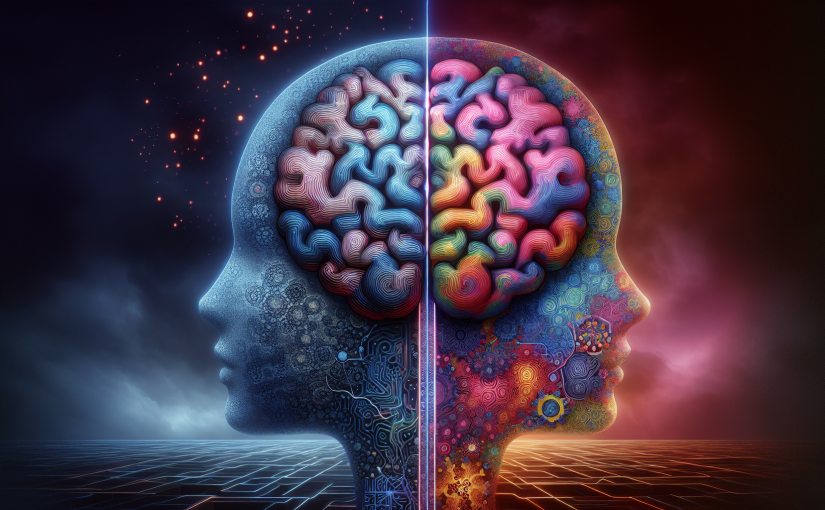
Did you know that our autistic brains are actually built and wired differently? And every autistic brain is different. From cortex, neocortex, amygdala, hippocampus, even the corpus callosum.

But, feminism again – female autistic brains appear to have more/better structure and integrity of the corpus callosum than male autistic brains. What does the corpus callosum do? It’s the white matter that connects the two hemispheres of the brain. So female autism appears different to male autism.

https://www.spectrumnews.org/news/brain-structure-changes-in-autism-explained/#:~:text=Compared%20with%20their%20non%2Dautistic,in%20their%20non%2Dautistic%20peers.

Counting Dead Women

Here, we have a simplistic but compelling comparison. There were 80 one punch fatalities in Australia (2012–2018). https://www.pathologyjournal.rcpa.edu.au/article/S0031-3025(22)00378-6/fulltext
Yet, in the ten months to the 1 November 2023, 43 women have been murdered, victims of domestic and family violence.


Compare and contrast – 80 men dead in 6 years with a legislated response, or 43 women dead in 10 months and regulatory changes that seem to have very little impact on the consistent annual death toll, with an average of one woman dying each week.


Where are our legislators? I’ve seen many promises made by politicians, but very little changes when it comes to women murdered in domestic and family violence. Are these false promises?

False Promises?
I wrote this poem in late 2022. Titled “ False promises”, it explores the tension between a desired future and reality, in a feminist framework. The refrains are from John Donne’s ‘Song: Go and catch a falling star’, and from a book by Daniel Tammett, ‘Every Word is a Bird We Teach to Sing’. ‘Teach me to hear the mermaids sing’ seemed a delightful, whimsical line, but presented a false promise, given the diatribe about women that ‘Song’ is. Similarly, the book, ‘Every Word is a Bird We Teach to Sing’, promised a delightful, whimsical exploration of language, but it was something else, another false promise. Lewis Carroll’s ‘Jabberwocky’ is also referenced, using the Frumious Bandersnatch, the wicked creature that must be killed, as a metaphor for women who must be repressed, oppressed and silenced.

False promises
Lee-Anne Ford


Every word is a bird we teach to sing.
But why is the Bandersnatch Frumious?
Just teach me to hear the mermaids sing.

“Song’s” hateful words, lyrical, seducing.
Beautiful words but naming us notorious!
Every word is a bird we teach to sing.

We have fought and we are still fighting.
Like the Bandersnatch, we are fuming, furious!
Just teach me to hear the mermaids sing.

Equality is distant, still storming, not norming,
Men’s rights, women’s wrongs, claims spurious.
Every word is a bird we teach to sing.

I want to rest, but there is no resting
Words fly, bitter divides, they want us pious.
Just teach me to hear the mermaids sing.

I want a simpler life, one of my choosing.
Where and when will I find it? I am curious.
Every word is a bird we teach to sing.
Just teach me to hear the mermaids sing.

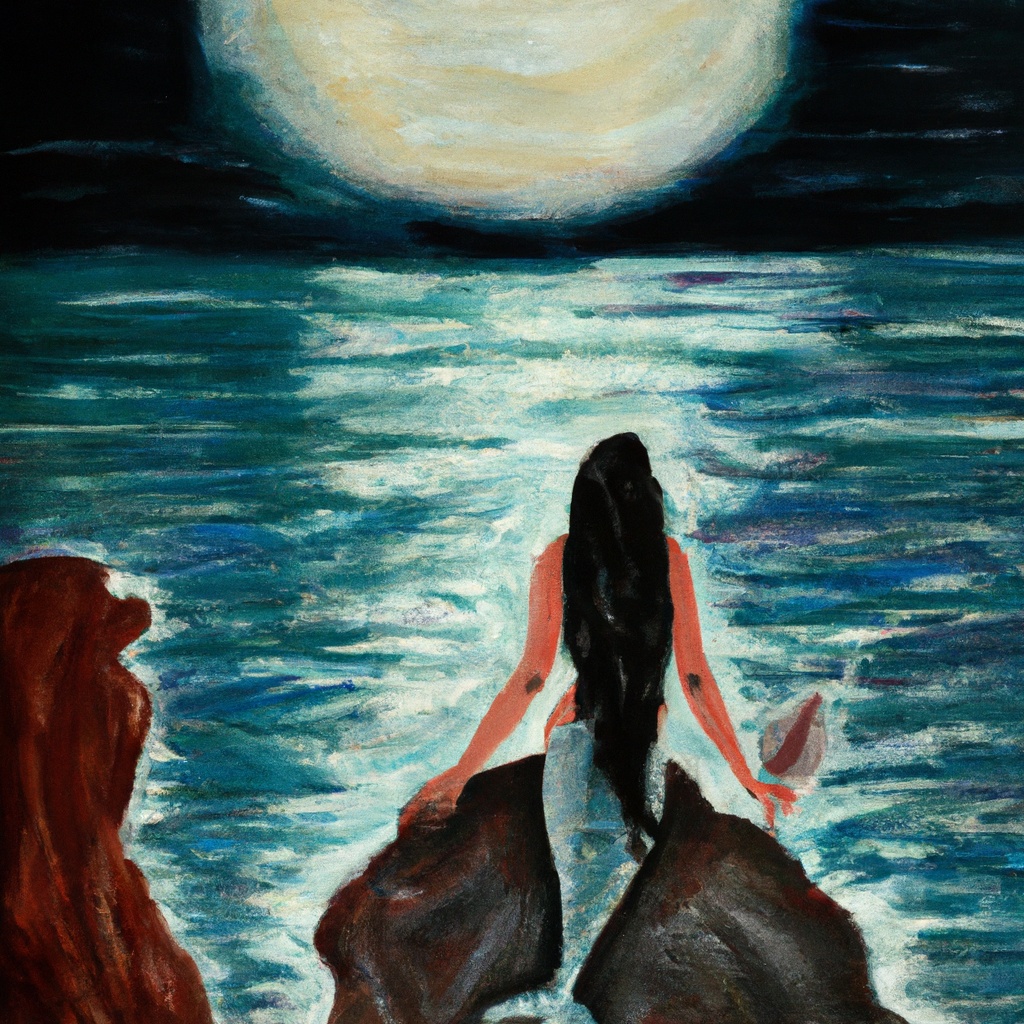
Mermaid singing, generated from Shutterstock AI