I have 51 years of lived experience as an undiagnosed autistic woman. Yes, I have special interests, not one, but many. Yes, I have stims, heavily internalised and minimised. Yes, I have sensory issues for sound, touch, smell, and taste. Yes, I have ARFID. Yes, my anxiety attacks were actually autistic meltdowns. Yes, my bad temper is rooted in PDA. Yes, my empathy is hyperempathy. Yes, my gift with words is hyperlexia, from childhood. Yes, my use of forms and checklists in my former career in occupational health and safety played to the autistic desire for routines. Yes, my former career in occupational health and safety is rooted in the autistic sense of justice. Yet, I went undiagnosed for 51 years due to high levels of masking and assimilation.
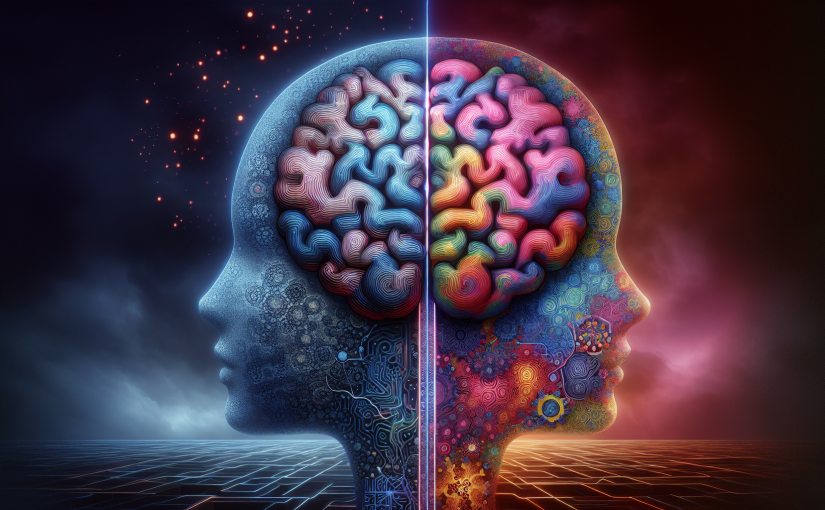
Why? Differences in brains between sexes could explain it. We already have a different brain from the neurotypical brain, so why not between the sexes?
Why? Because autism typically presents differently the sexes.
Why? Because the diagnostic criteria are based on the typical presentation of one gender.
Research indicates that the brains of autistic women differ from those of autistic men. (Craig et al, 2007).
In 2007, Craig et al. conducted a study to examine regional grey-matter and white-matter differences in the brains of women with autism spectrum disorder (ASD). Using MRI, they found significant differences between the brains of 14 autistic women and 19 autistic men.”
They found, through MRI, that the brains of the 14 autistic women differed significantly from the 19 control images from autistic men.
In 2021, Floris et al. identified sex differences in the intrinsic brain function of individuals with autism, particularly in dorsolateral occipital interhemispheric interactions. These findings were robust across different data processing methods and replicated in larger independent samples.
In 2022, Supekar et al. conducted a study to identify functional brain organization markers that distinguish between females and males with ASD and predict symptom severity. They found that females with ASD exhibit a functional brain organization significantly different from that of males with ASD. Additionally, they identified specific functional brain features that differentiate females from males with ASD
These findings suggest the need for different diagnostic criteria for women and girls with autism, as their brain structures and functions differ significantly from those of autistic males. Currently, much of the existing research and diagnostic criteria are based on studies of men and boys with autism, which may not adequately capture the presentation of autism in females.”.
Tony Attwood, a renowned psychologist specializing in autism, has developed several assessment tools specifically designed for diagnosing autistic girls and women. These include a modified version of the QG-ASC for adult women.
There is a pressing need for the authors of the DSM-5-TR to recognize and incorporate these sex differences in the diagnostic criteria for autism, ensuring more accurate diagnoses for women and girls..
- Craig, M.C., Zaman, S.H., Daly, E.M., Cutter, W.J., Robertson, D.M., Hallahan, B., … & Murphy, D.G. (2007). Women with autistic-spectrum disorder: magnetic resonance imaging study of brain anatomy. British Journal of Psychiatry, 191(3), 224-228. doi: 10.1192/bjp.bp.106.034603.
- Floris, D.L., Filho, J.O.A., Lai, M.C., et al. (2021). Towards robust and replicable sex differences in the intrinsic brain function of autism. Molecular Autism, 12(1), 19. https://doi.org/10.1186/s13229-021-00415-z
- Supekar, K., de los Angeles, C., Ryali, S., Cao, K., Ma, T., & Menon, V. (2022). Deep learning identifies robust gender differences in functional brain organization and their dissociable links to clinical symptoms in autism. The British Journal of Psychiatry, 220(4), 202-209. doi: 10.1192/bjp.2022.13
 The Auld Skald's Fudgel