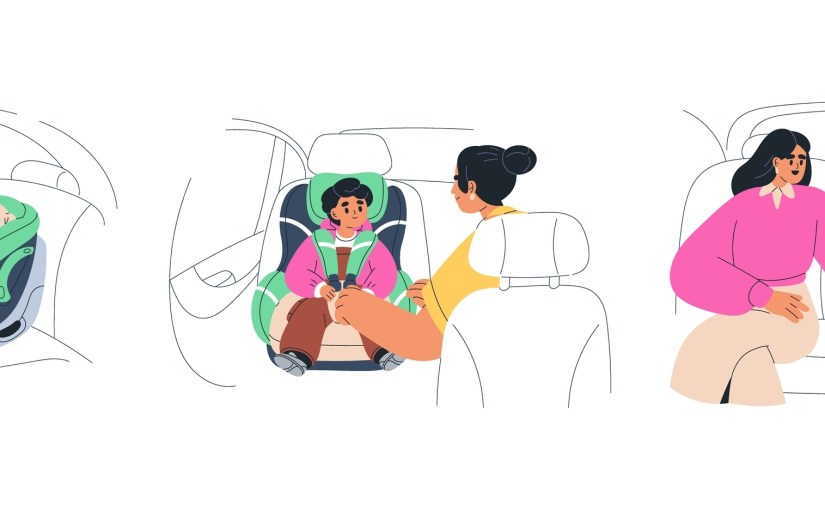
Did you know that “land transport accidents” are a leading cause of child deaths?
In 2015–2017, among children aged 0–14, the 3 leading causes of injury deaths among children were:
https://www.aihw.gov.au/reports/children-youth/australias-children/contents/health/injuries
land transport accidents (29%), which includes road traffic fatalities
accidental drowning (18%)
assault (11%) (Figure 3).
So I was shocked to observe a child, unrestrained, in the back seat of a car. This was in a busy, 6 lane road, in peak hour traffic.
I was behind this car, stopped at traffic lights, and watched this child walking around the back seat, half climbing into the cargo area of the hatchback, and standing between the two front seats.
What’s the problem with this, a child unrestrained in the back seat of the car?
Firstly, children who wear an appropriate restraint are more likely to have no injury or only superficial injuries compared to unrestrained or inappropriately restrained children. (QISU, 2007)
This QISU bulletin says, that between 1998 and 2005, 1949 children presented at emergency departs after a motor vehicle crash. One third of all presentations (561) presented with serious injuries:
- open wounds
- fractures
- intracranial injuries
- internal organ injuries
- multiple injuries
- crush injuries
- eye injuries
- spinal injuries
- dislocations
- burns
- blood vessel injuries
- traumatic amputations
All except burns could be linked to not being restrained in an appropriate car seat.
Secondly, it’s in the road rules.
In addition to the safety risks, if a child is not in an approved child restraint that is properly fastened and adjusted, you may be fined $1,161 and incur 4 demerit points for each child that is not properly restrained*.
https://www.qld.gov.au/transport/safety/rules/children
Double demerit points apply for second or subsequent child restraint or seatbelt offences committed within 1 year after an earlier offence.
*As at February 2024.
There are times when children aren’t required to be in a car seat in Queensland, such as when travelling in taxis, on buses, trains or personalised transport services such as taxi, limousine and ride-booking services.
So why do I care?
I am a driver for Shebah, the all-women ride share service in Australia. One vital service we offer is car seats for your child – rear facing, front facing and boosters. So you can understand, I hope, my consternation at seeing a child, unrestrained, in a car.
The car I was following was not a taxi, limousine or rideshare vehicle. It was a regular, everyday, hatchback, a family car.
How could parents be so cavalier about their child’s safety? Well, maybe not. There are a few exemptions. These can be if the child has a temporary medical condition or a physical disability that prevents them from using a car seat or seat belt. In that case, there should be a medical certificate that provides instructions on how the child should be restrained in a car.
If the child has a long term condition or disability, the Australian Standard about child car seats allows for modified car seats, speciality seats, imported harnesses or even harnesses that allow a child to lie on the back seat. There are a lot of hoops to jump through for these.
Kidsafe Queensland has great information about car seats, and even hires car seats out.
Look after your kids. As George Benson sang
I believe the children are our future
George Benson, “The Greatest Love of All”
Teach them well and let them lead the way
Show them all the beauty they possess inside
Give them a sense of pride to make it easier
Let the children’s laughter remind us how we used to be
 The Auld Skald's Fudgel