
A novel I read a long time ago spoke about “tha market” being about confidence. In that story, a convenient billionaire in on the gig bought shares in a particular company to “shore up confidence” in it. That always stuck with me, tucked neatly alongside stories of grifters and hucksters, con men and women and mentalists… Recent stock market trials and tribulations prompted this post.
The stock exchange is often touted as the beating heart of modern capitalism, a system where companies raise capital and investors build wealth. But at its core, the stock market operates on confidence—perception rather than intrinsic value. This reliance on faith, speculation, and psychological manipulation mirrors the mechanics of a long con.
What is a Long Con?
A long con is an elaborate confidence trick that unfolds over time, designed to build trust and extract maximum value from its victims before they realize they’ve been deceived. Unlike short cons—quick scams that rely on immediate deception—a long con requires careful manipulation of belief. Classic long cons involve setting up an illusion of legitimacy, often with multiple players reinforcing trust.
The origins of the term confidence trick date back to the 19th century, when William Thompson, a New York swindler, convinced victims to lend him valuables with the promise of returning them. His success relied on social engineering, creating an aura of credibility so that targets willingly handed over their possessions.
Sound familiar? The stock market runs on the same principles. Investors place their faith in companies and the market as a whole, believing that their money will return with profit. But this confidence is easily manipulated, and when the illusion shatters—think dot-com bubble, 2008 financial crisis, or sudden corporate collapses—those at the top cash out while everyday investors are left holding the bag.
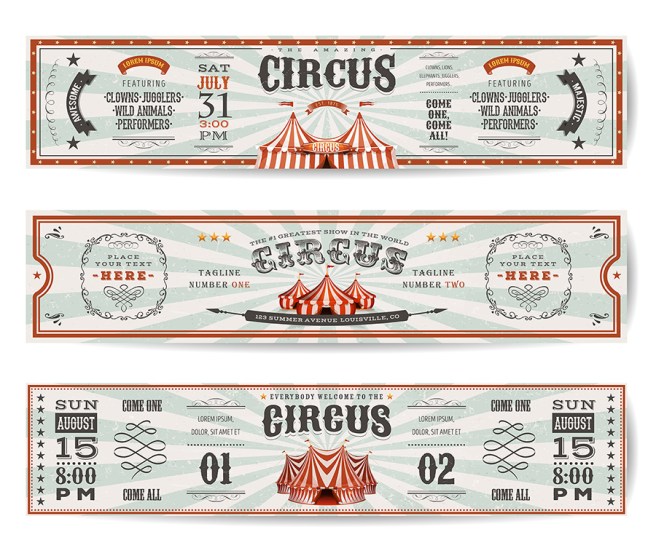
Step Right Up to the Grestest Show in Town! Write Your Own Market Gamble!
The Stock Market as a Confidence Game
Share prices do not reflect absolute value; they reflect perceived value. A stock rises not necessarily because a company is performing well but because investors believe it will perform well. This collective confidence creates self-reinforcing bubbles, only for them to burst when sentiment shifts. The very phrase “market confidence” acknowledges this psychological aspect—when confidence is high, prices rise; when confidence wanes, markets tumble.
Governments and regulators attempt to maintain transparency through mechanisms such as continuous disclosure obligations and trading halts.
- Continuous Disclosure (ASX Rule 3.1): Listed companies on the Australian Securities Exchange (ASX) must immediately disclose any information that could materially impact their stock price. Theoretically, this prevents insider trading and maintains fairness. In practice, it often allows companies to strategically time announcements to minimize damage or maximize hype.
- Trading Halts: If a company expects major news to impact its stock, it can request a trading halt to allow the market to digest the information. This prevents knee-jerk reactions but also gives executives time to spin narratives, further reinforcing the confidence game.
Despite these measures, the fundamental nature of the stock market remains unchanged: it thrives on belief, speculation, and carefully managed illusion.
The Sheer Uncertainty of the Stock Market
If the stock market is a confidence game, then it is also a house of cards. Crashes like the 1929 Great Depression, the 2008 Global Financial Crisis, and the COVID-19 market collapse all show how fragile investor faith is. Even in non-crisis times, markets are notoriously unpredictable—commodity prices fluctuate, consumer trends shift, and unforeseen disruptions cause financial chaos.
A stark example is Enron, once hailed as an innovative energy giant, which crumbled overnight when accounting fraud was exposed. The confidence in Enron was carefully cultivated, with executives leveraging market perception while manipulating financial statements. By the time investors realized the con, the damage was irreparable.
If the stock exchange is such a precarious system, what alternatives exist?
Enter B Corps: A Different Way of Doing Business?
Certified B Corporations (B Corps) present themselves as an ethical counterbalance to profit-driven corporations. These companies commit to social and environmental responsibility, balancing profit with purpose. Unlike traditional corporations, which primarily serve shareholders, B Corps claim to serve all stakeholders—employees, customers, communities, and the planet.
What is B Corp Certification?
B Corp certification is awarded by B Lab, a nonprofit that evaluates companies based on their impact in areas like governance, employee welfare, environmental responsibility, and community engagement. The certification process includes:
- B Impact Assessment: Companies must score at least 80 out of 200 points across five categories: governance, workers, community, environment, and customers.
- Legal Accountability: Companies must amend their governing documents to commit to stakeholder interests beyond just shareholder returns.
- Transparency: Certified companies must publish their B Impact Report, detailing their social and environmental performance.
- Recertification: Every three years, companies must reapply, proving continued commitment to B Corp principles.
Recognizable B Corps in Australia
Several well-known Australian companies have obtained B Corp certification, including:
- Bank Australia – A customer-owned bank that prioritizes ethical lending and environmental sustainability.
- Ecostore – A household cleaning and personal care brand committed to reducing plastic waste and toxic chemicals.
- Who Gives A Crap – A toilet paper company that donates 50% of its profits to sanitation projects worldwide.
- KeepCup – The reusable coffee cup brand tackling disposable cup waste.
- Australian Ethical Investments – A B Corp that is also listed on the ASX, proving that ethical investing can exist within the constraints of the stock market.
Conclusion: Confidence vs. Commitment
The stock exchange, by its nature, is a long con—a system where faith, perception, and strategic narrative control determine success. Continuous disclosure rules and trading halts attempt to instill fairness, but ultimately, the market remains a confidence game.
B Corps offer an alternative model, focusing on ethical business practices and stakeholder interests. However, when a B Corp goes public, it enters the same speculative ecosystem as any other corporation. The tension between maintaining ethical commitments and satisfying investor expectations creates an ongoing challenge.
Australian Ethical Investments demonstrates that it is possible to be both a publicly traded company and a B Corp while complying with all ASX and superannuation regulations. This challenges the assumption that corporate ethics and profitability are mutually exclusive. While the stock exchange thrives on speculation, B Corps rely on a different kind of confidence—one rooted in trust, accountability, and sustainable impact.
So, is the stock exchange truly a long con? The answer lies in whether investors continue to believe in the illusion—and whether B Corps can resist being absorbed into the same confidence-driven machine they claim to oppose.
 The Auld Skald's Fudgel