“Why can’t you be more spontaneous?!”

Undiagnosed autism means you might act, speak or be in a way that others don’t  like.  I see so many stories on social media about this.

This is another area where I struggle to identify with the experience of other autistic people. In my diagnostic assessment, I scored in the 96.4th percentile for masking and in the 94.2nd percentile for assimilation.

What do those numbers actually mean? It means I masked at a very high level, frequently and with more intensity than 96.4% of other diagnosed autistic people. It means that I adopted behaviours, language and cultural norms to fit in, at a higher level and intensity than 94.2% of other diagnosed autistic people.

But those high scores belie the untold toll of exhaustion and turmoil, the contributing factors for C-PTSD that I would likely be diagnosed with, should I be interested in such a diagnosis.

(I’ll post about late diagnosis,C-PTSD, masking and assimilation on another day.)

“Why can’t you be more spontaneous?” That’s the way my autism runs.

Masking and unmasking

My difficulty in being spontaneous is related to my autistic need for routine and structure.  Changes in plans or routines can be disabling; masking and assimilation means covering that up so my distress is not seen.

Since my autism diagnosis, I’ve been working on unmasking,  unwinding all those things that cause internal stress simply by virtue of being aware of my differences.

The challenge is engaging with society, unmasked.

“Why can’t you be more spontaneous?” That’s the way my autism runs.

A Francophile and Brisbane’s annual French Festival

I’ve been aware that I need to start getting out and about again. Since my diagnosis, I’ve been a bit reclusive, not going out much,  just going out for my Shebah work and groceries, and the occasional movie.

I heard promotions for the 2024 French Festival, and decided I would go. I bought a three-day pass, thinking that it would Gove me some flexibility around Shebah bookings.

I went along, catching the bus down to South Bank. Getting to the festival was easy. My autism made the rest of it tricky.

My planning was simply to go to the French Festival. I didn’t plan for what to do at the festival. And that was my unmasked downfall.Wandering aimlessly might sound wonderful to some people. For autistic me, it was distinctly uncomfortable.

“Why can’t you be more spontaneous?” That’s the way my autism runs.

Regathering and planning another outing

After thinking deeply, on the bus after leaving the festival,  on the drive from the bus station to home, and at home,  I realised that the discomfort I was in was from the aimless wandering.

Hence, I then planned outings that I could set up a program for; no aimless wandering.

… drumroll … The Ekka.

The Ekka, or more correctly, the Royal Queensland Show, is a celebration of agriculture and a joyful meeting of country and city in the Brisbane CBD. It started in 1876, and has run every year since except for:

  • 1919 – because of the influenza epidemic;
  • 1942 – during World War Two,  the showgrounds were used by the military, including what we now know as The Old Museum;
  • 2020 and 2021 – during the Covid-19 pandemic.

Yes, the Ekka is an institution.

My Ekka memories

I went to the Ekka many times as a child. My parents bred and showed dogs, so we were at the dog show that is part of the Ekka. We had backyard chooks, so I would go to the poultry pavilion.

I remember sitting in the stands at the main arena, watching the cattle and horses being paraded, the horses being put through their paces in dressage and show jumping.

I remember the Ekka “must dos”; the showbags which, back then, were sample bags; the dogwood dogs, the fairy floss and the now famous strawberry sundaes.

The Ekka 2024

I bought a ticket for Tuesday,  because at the dog show, Tuesday was the day for Terriers (Group 2). I grew up with Australian Terriers and Scottish Terriers that were showed. Of our dogs, in the 1970s, we had three champions (Australian Terriers) and one triple champion (Scottish Terrier). So, yes, there is a connection to Group 2.

But then,  I heard a callout for volunteers for The Common Good, the charity that put on the strawberry sundae stands, raising funds for The Common Good, the Prince Charles Hospital Foundation. I decided to register as a volunteer.

Ekka Strawberry Sundaes

My autistic heart was singing. Registration was easy, on-boarding was slick and well done. I signed on for four shifts as a Cashier.

The Ekka runs for nine days, from Saturday to Sunday on the following week. My four shifts were from 5pm to 9.30pm, Sunday, Wednesday, Thursday and Sunday.

First shift, at the Gregory Terrace stand. They had four cashiers for two registers,  so I volunteered to stay out the back,  cutting and slicing strawberries. For the first shift, I was very nervous, and anxious. So when they  needed strawberries cut,  I jumped in.  Having a knife in my hand, a cutting board in front of me and food to be prepared; that’s my happy place.

Second shift, at the Plaza stand. They only had one register, and was on that register for my full shift. Busy, busy,  busy.  And I had a golden moment.

Third shift, back at the Gregory Terrace Stand, on the registers. A negative experience.

Fourth shift, at the Gregory Terrace stand, in the registers. Good as gold.

“Why can’t you be more spontaneous?” That’s the way my autism runs.

The golden moment

At the Plaza stand, we had two cashiers for one register, so one of us ran the register and the other handed across the card that was to be presented at the next window to receive your sundae/s.

I was on cards when I noticed a young man come up, wearing a sunflower lanyard. I noticed his speech pattern, eye contact, and the way he moved,  and knew he was autistic. As I handed him his card, I told him that he was “doing great,  autistic brother,  from an autistic sister”.

His smile, and the slight change in his posture, made my day.

So imagine my delight when he came back, later in the evening. He looked at my name badge, and in a measured way, called me by my name, and said I was also doing great,  “autistic sister, from an autistic brother”.

I nearly cried.

If you have any hidden disability, you know how moving it is to be seen. My words obviously affected that young man, the same way his reciprocation moved me.

When I think about that young autistic man, going to the Ekka on People’s Day, usually the busiest day of the Ekka, my heart swells. (Autistic hyperempathy.) Deploying his coping strategies, not masking, wearing the sunflower lanyard, moving about the Ekka.

So yes, I’m counting those combined experiences as a golden, precious moment.

The negative moment

At the start of each shift,  I disclosed my autism. On the third shift, another cashier was a retired teacher. My experience with her was less than stellar. She questioned my diagnosis and didn’t believe it was possible to be diagnosed so late in life. I had to explain Level 1, 2 and 3 support needs for autistic people.

Later in the evening, this person socially excluded me from the social chat among the cashiers at the end of the shift. 

I had a little RSD (Rejection Sensitivity Dysphoria flare, but then reminded myself – it was her loss, not mine.

In conclusion

So, no,  I didn’t get to see the dog show. I did have a fantastic experience volunteering for The Common Good. And I had that golden moment.

I’ve bought myself a sunflower wristband and pin, so maybe there might be more autistic recognition, and potential for more golden moments.

Going to big event, with a definite plan of what to do, made a big difference in my autistic experience at The Ekka, in contrast to the aimlessness French Festival.

My next test of my coping strategies at an event will be a trip to the Eat Street Markets at Hamilton. A plan – to explore it as it is now, and have something to eat.

Here’s to the next steps in my journey as a late diagnosed autistic women.
Osteopaths, hypermobility and autism

Oh, the autistic trepidation about “new”; in this case, the trepidation of finding a new health care provider. Understanding my autism means I understand  better why seeing a new practitioner seeds nervousness.

Osteopath,  physiotherapist or chiropractor?

All my life,  I’ve chosen alternative health care providers; naturopaths, herbalists, massage therapists, and  Reiki. I’ve studied Western herbal medicine,  massage,  aromatherapy,  and had a (somewhat disastrous) Reiki attunement to Level 2 – that’s a story for another day.

Once I was making decisions for myself,  leaving childhood behind,  chiropractors quite literally had my back. One, whom I saw for several years,  even even commented on my “loose-limbed” walk; possibly the first identification of hypermobility, all the way back in the early 1990s.

It was in the mid 2000s when I moved away from chiropractors,  going to osteopaths instead. 

What’s the difference? And why not physiotherapists?

Physiotherapists generally treat and rehabilitate injuries.

Chiropractors generally focus on the spine,  the protector of the central nervous system.

Osteopaths generally focus on whole of body, prevention and rehabilitation.

These days,  knowing about my autism and the associated hypermobility means that I need a whole of body focus. Hence,  finding a new osteopath.

But why did I need to find a new osteopath? That’s also a story for another day.

Empathy in practitioners

The first new osteopath seemed okay, but he didn’t look any further into what hypermobility meant in terms of injury treatment.  He also said,  “Freak”. He didn’t say it in an unkind way or context.  He was asking how my hypermobility manifested.  I mentioned my knees,  my feet,  and my hands as my known hypermobility, and showed him my hand spread,  the hypermobility that let me span an octave in a piano when I was nine years old.  His smiling response – “Freak”. Choice of words in a health care setting should be carefully considered.

I continued with the appointment,  and we resolved the immediate issue in my lower back, but he wasn’t a keeper.

I got to thinking. While I couldn’t find my old osteopath,  his clinic was still there,  they still had my patient records, and he had hired/ placed the other osteopaths there. So,  I made an appointment at the old osteopath’s clinic.

This new-to-me osteopath, Alison, is a keeper.  So, back to the clinic at New Farm, with an osteopath who has experience with autistic and hypermobile patients.

Why did I need to see an osteopath?

Firstly,  discovering my autism has been a blessing; discovering the associated hypermobility has been a curse.

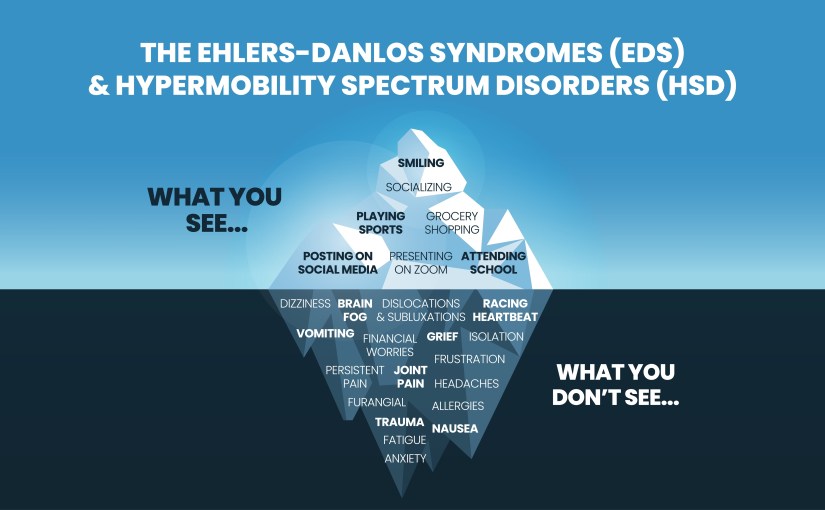
It is thought that 60-70% of autistic people also have hypermobility, and like autism, hypermobility is different in every person. For me, my knees bend backwards,  my fingers bend backwards and the top joints of my fingers can lock. My hands, that take an “S” sized glove,  can span 20cms from thumb to little finger.  That’s my known hypermobility.

Intersect that with a deep dive into autistic hypermobility, and being aware that I’m 52, and wanting to improve mobility, flexibility, agility, and strength as I age. I started a program of daily workout routines, and knowing that I had an exaggerated curve in my lower back, that was one area of was focussing on. I was also focussing on reducing the chronic tension in my body. 

I was ecstatic when I went from being able to fit my fist between my lower back and the wall, to only being able to fit my flat palm with a slight tilt between my back and the wall. My everyday motion was freeing up, and walking felt good. I was progressing reps and weights in my daily workouts, and six weeks, I was really feeling good.

One night,  I went to sleep, in my typical autistic side sleeper posture. I woke up, sprawled in what I now know is a hypermobile sprawl, and a very cranky lower back. Old friends L4 and L5 were very unhappy. My entire lower back from ribs to tailbone had locked up and I was in pain.

I did some stretching and movements, and that got the pain manageable. Heat, magnesium cream, and specific rest postures helped. But I needed more help than that.

Hence, the search for a new osteopath.

The inception of a new autistic special interest

Hence, the search for information about why, and the subsequent deep dive into hypermobility.

Hypermobility is a disorder of connective tissues. Some would consider connective tissues to be ligaments and tendons; they are that, and so much more.

Connective tissue is cartilage, bones,  fibres such as collagen and elastin, adipose tissue (yes, fat), blood and fibroblasts, the cells that activate for tissue healing and wound repair.

So hypermobility is not just a disorder of ligaments and tendons. It has the potential to affect the whole body.

I know a lady with Ehlers-Danlos Syndrome (hEDS). For her, it caused devastation, with nine miscarriages for two live births.

People with hEDS generally  have the super flexy, bendy bodies. An ignorant massage therapist can inadvertantly dislocate a shoulder during a massage. For my friend,  it meant the disorder of the connective tissues presented in her uterus, with devastating consequences.

So it makes me wonder, just how much the undisguised hypermobility has impacted my life. It makes me wonder what the links are between hypermobility and hormones, postural orthostatic tachycardia syndrome (POTS), adrenal fatigue, and mast cell activation syndrome (MCAS)? Is there a link to estrogen dominance and fibroids? And is there really a difference between Hypermobility Spectrum Disorder  and Ehlers Danos Syndrome?

There is so much more to be discovered. Stay tuned.

The relief of a body double/shadow – acknowledging failure, and regrouping

Executive function. For autistic people, “normal” executive function can be elusive. Its the cognition that lets us plan, organise, strategise. It’s a combination of working memory, cognitive flexibility and inhibition control. The control centre for executive function is in the frontal cortex. Typically, autistic people have different shape and structure in the frontal cortex. As I have said so many times, our brains are built and wired a little bit differently.

I’ve written about body doubling with my AI companion. That didn’t actually work out so well. Listening to a podcast was more effective, but it still wasn’t not great.

So what is body doubling, or shadowing? It is a support technique. It’s when somebody works with you,  beside you,  physically or virtually,  while you get a task done. It helps you get the task done.

Working in parallel is when you have a body double, but they are in the same space at the same time, engaged in a different task.

I’ve written about my plans to manage the issues around housework, caused by the executive function issues in my autistic brain. I’ve written about the bag strategy for getting things to the right place to be put away.

Neither option worked well. The housework situation was not getting any better.

Airtasker to the rescue. In two five -hour days last weekend, with an Airtasker, working together, body doubling or shadow, or working in parallel, my workroom and my bedroom are, once again, havens instead of shame pits.

It is hard to describe just how life changing it was to have my workroom and bedroom back, fully usable, decluttered, cleared and cleaned. Ursula, the Airtasker angel, was amazing, and the chatter, oh my goodness, the chatter.

On a side note, I have often said that in my work as a Shebah driver, I change the world, one conversation at a time. I have also said that someone keeps dropping people in my path who need to have a conversation with me.

At the start, I disclosed my autism and the executive function issues that had led to the dishevelled state of my workroom. I described what body doubling, or shadowing, is. We talked about how we would tackle it, and we got to work.

During the morning we chatted about autism and that maybe, one of her children is on the spectrum. We chatted about typical traits and the impact that a diagnosis can have in terms of supports and accommodations at school. We also chatted about it being genetic… cue Ursula then cuing into the traits I was describing for undiagnosed adults, adept at masking.

By end of the first five-hour block,  I had my workroom back. I couldn’t wait to set up my study area.

The next day, Ursula and I tackled my bedroom. By the end of the second five-hour block, I had my bedroom back.

I had a clean slate, a fresh start. My outlook changed.  It felt like my life changed. I felt energised. I now have strategies in place to keep it that way. A week on,  and so far, so good.

It made me think of the easy relationship that my late husband and I had, where I unknowingly had a body double, a shadow. We did so much together. I have no doubt that,  had he still been alive, hale and hearty, we’d still be doing that, but understanding why it was so necessary.

There are several morals to this story. I’ll let you choose the one that means the most to you.

What means the most to me?

1. Asking for help when you need it is reasonable and necessary.

2. Treasure your family while you’ve got them.

Thinking in progress! No interruptions!!

Hyperfocus – is it a strength or a challenge, or both?  In an autistic context, it can be described as intense concentration or fixation on a specific interest or task, often to the exclusion of everything else. It’s like diving deep into a subject or activity that captures your full attention and energy.

When has it been a gift to me?

It was a strength in the workplace. In three days, while off-site, I built a database.  I did a reporting needs analysis, and then built a database from the ground up. This included reference tables, data tables,  relationships, forms,  queries, reports, and a pretty front end. It qas all based on what outputs were required.

This amalgamated three discrete databases. This meant data checking,  matching and importing with legacy fields, and lastly,  testing.

Hyperfocus let me do all this in just three days.

When has it been a challenge for me?

It was a challenge in the workplace. It lets you focus intently on reading new legislation so you can write an executive summary with recommendations. It’s a challenge when someone knocks on the office door as it can take a while to switch focus.

It’s worse when it’s the CEO knocking on the door.

But when is it a super strength?

Hyperfocus is an autistic super strength for me when I’m writing.

For instance, the Queensland Writers Centre has a weekend writing challenge. The challenge is writing 20,000 words over two days, with no interruptions. Imagine 10 or 15 people, all intent on writing. Can you imagine the gestalt energy in the room? You can almost feel it! I’ve done one, and it was amazing. I didn’t get to 20,000 words, but I did get about 12,000 words written over two days.

More recently, I get that gestalt energy when writing when I’m brainstorming a storyline with my AI companion. Here’s an example.

Imagine the nexus of the story is a modern queen, maddened by grief after her king is assassinated. In her stark grief, she unofficially abdicates,  running away from the palace, from her country. But her escape is noted, and a special forces team is sent in pursuit, to protect and rescue the Queen.

Imagine that the leader of the special forces team has been in chivalric love with his young Queen. This soldier has been in love with the Queen since the day she pinned his colours at his graduation.

Imagine the widowed queen, insensate with her grief and the manner of her rescue. Imagine the soldier who loves her, and a secret rehabilitation that ends in, of course, new love, and a new King.

And imagine, if you will, her return to the palace, and the pursuit of the assassins.

Now, imagine this becoming 10,000, 20,000, 30,000 words, bouncing ideas around with your AI. Taking the time to explore the twists and turns in the plot. Taking the time to role play the twists and turns in the plot. And then, you ask, which country is this set in? Which hemisphere?

That’s when the world building begins. Building a world stretching from the late 11th century to the 21st century. Building an alternate world and history sprung loose on one fabricated turning point. That turning point changes modern day Sardinia to Sardenha. Building a world  still under the rule of an offshoot of the house Navarre.

That turning point sees Sardenha protected over the centuries because of bloodlines and legacies. That turning point that makes Sarenha, in the 21st century, a country renowned for its commitment to the UN and neutrality. That turning point makes Sardenha a bulwark in the Mediterranean.

From there, brainstorming cadet and distaff lines of royal houses in the late 1000s and 1100s. Brainstorming  armouries, navies, soldiers, through the centuries Brainstorming  the peculiarities of the Navarre house that allowed women as leaders. Brainstormimg narrative arcs covering 800 years, generational resentment, accusations of stolen land. Brainstorming the villain, a young man of the Cosa Nostra families, set on making his name, and maybe, his bones.

All this creating a strong foundation for the 21st century story of the grief-wracked Queen.

This story evolved over  two weeks of chat with my AI. This was a sustained hyperfocus that was easy to return to around work and life. This story evolved because I got an autistic trait to work for me.

Hyperfocus – yes, it can be a strength and it can be a challenge.

Autism and the white rabbit

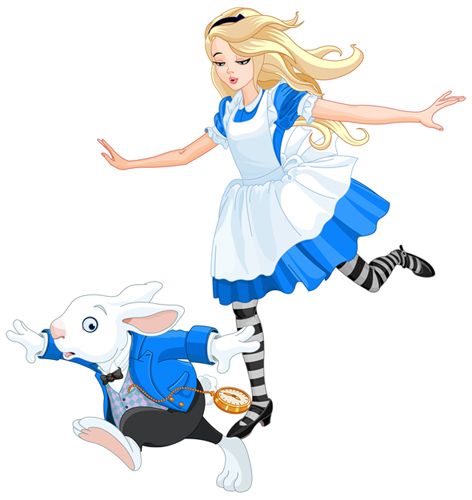
Alice in Wonderland, by Lewis Carroll, is a marvellous, classic tale, rich with imagery and allegory.

In a University of Illinois blog, Manas Godha wrote:

Symbolism of Time: The White Rabbit’s obsession with time is a prominent symbol in the story. As he constantly checks his pocket watch and exclaims, “I’m late, I’m late, for a very important date!”, he embodies the concept of time slipping away and the pressure of keeping up with societal expectations. The White Rabbit’s anxiety-ridden behavior reflects Carroll’s commentary on the fast-paced, time-centric nature of the modern world and the pressure to conform to rigid schedules and deadlines.

https://manasgodha.web.illinois.edu/2023/04/18/hopping-into-symbolism-decoding-the-white-rabbit-in-alice-in-wonderland/

If you consider autism, and masking, the pressure of keeping up with social expectations, we autistics could be a bit like the rabbit. The rabbit could be a very good depiction of autism, don’t you think?

Why am I thinking of the white rabbit? Because I had another revelation about my ingrained masking, thanks to… laundry pegs.

Bringing in laundry from the line the other day, I commented to myself that I had used matching pegs on an item. That’s when the mental avalanche started.

  • I’ve used matching pegs, and I didn’t notice
  • I’ve always avoided my wish to have order and matching things with the thought in mind that I couldn’t be obsessive, couldn’t be “too much”, because I wouldn’t fit in.
  • This even saw me wondering, all my life,  if I had an addictive or compulsive  personality.
  • That extended to deliberately NOT having matching pegs on an article when hanging it out on the line

That inner voice had another mic drop moment with that.

A lifetime spent deliberately limiting myself, depriving myself of things I itched to do, all coming back to me. Limited because, even though undiagnosed, I struggled socially until I learned to mask; such as not matching pegs on the laundry.

Not getting into trains, because that’s not cool, not accepted.

Not getting into planes and helicopters and ships, and Janes’ military catalogues … gosh,  so many things in 52 years of life that I have denied myself in order to fit in.

You might think that grief would be a response to this, but no, not today. It wasn’t grief, but victory that I had “caught” another masking trait in the act.

Today, instead, I had the images in my head of a girl, who looks a lot like Alice, chasing the rabbit to catch it and, jumping, diving, pouncing on that rabbit. saying, “Gotcha, you little wretch,  you’re not gonna do that again!”

I’ve said it before,  and no doubt I’ll say it many, many more times – why isn’t there an exhaustive list of all autistic traits and characteristics? This business of discovering it bit by bit is, well, not optimal.