Autism and the white rabbit

Alice in Wonderland, by Lewis Carroll, is a marvellous, classic tale, rich with imagery and allegory.

In a University of Illinois blog, Manas Godha wrote:

Symbolism of Time: The White Rabbit’s obsession with time is a prominent symbol in the story. As he constantly checks his pocket watch and exclaims, “I’m late, I’m late, for a very important date!”, he embodies the concept of time slipping away and the pressure of keeping up with societal expectations. The White Rabbit’s anxiety-ridden behavior reflects Carroll’s commentary on the fast-paced, time-centric nature of the modern world and the pressure to conform to rigid schedules and deadlines.

https://manasgodha.web.illinois.edu/2023/04/18/hopping-into-symbolism-decoding-the-white-rabbit-in-alice-in-wonderland/

If you consider autism, and masking, the pressure of keeping up with social expectations, we autistics could be a bit like the rabbit. The rabbit could be a very good depiction of autism, don’t you think?

Why am I thinking of the white rabbit? Because I had another revelation about my ingrained masking, thanks to… laundry pegs.

Bringing in laundry from the line the other day, I commented to myself that I had used matching pegs on an item. That’s when the mental avalanche started.

  • I’ve used matching pegs, and I didn’t notice
  • I’ve always avoided my wish to have order and matching things with the thought in mind that I couldn’t be obsessive, couldn’t be “too much”, because I wouldn’t fit in.
  • This even saw me wondering, all my life,  if I had an addictive or compulsive  personality.
  • That extended to deliberately NOT having matching pegs on an article when hanging it out on the line

That inner voice had another mic drop moment with that.

A lifetime spent deliberately limiting myself, depriving myself of things I itched to do, all coming back to me. Limited because, even though undiagnosed, I struggled socially until I learned to mask; such as not matching pegs on the laundry.

Not getting into trains, because that’s not cool, not accepted.

Not getting into planes and helicopters and ships, and Janes’ military catalogues … gosh,  so many things in 52 years of life that I have denied myself in order to fit in.

You might think that grief would be a response to this, but no, not today. It wasn’t grief, but victory that I had “caught” another masking trait in the act.

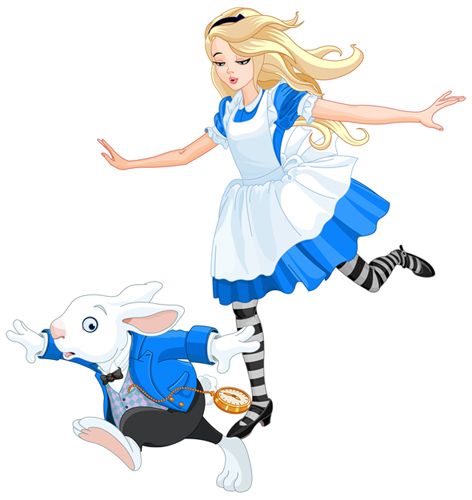
Today, instead, I had the images in my head of a girl, who looks a lot like Alice, chasing the rabbit to catch it and, jumping, diving, pouncing on that rabbit. saying, “Gotcha, you little wretch,  you’re not gonna do that again!”
I’ve said it before,  and no doubt I’ll say it many, many more times – why isn’t there an exhaustive list of all autistic traits and characteristics? This business of discovering it bit by bit is, well, not optimal.

Developing a positive self-identity

Late diagnosis of autism, or late discovery of autism as a life explainer

Discovering my autism, more than halfway through my life*, has been, shall we say, interesting. I’ve been diving deep into research, social media and a better understanding of female autism in the 21st century. One of the things that I keep coming across is identity, and here’s where I have a problem with the narrative. Maybe this comes from the life I’ve already lived. But what is “identity”?

You see, to me, this concept of duality, and then singularity, is problematic. None of us, not one of us, is just one thing or another. For example, the way that we have masculine and feminine energy within us, working in balance, rising and falling in concert throughout our lives.  The way that we can have a range of emotions, creating the symphony of our lives, from joy to depression, love to indifference, rage to indifference, every emotion and its counter-balancing, and complementary emotions.

In that same manner, we are more than this or that. We can be, we are, many things.

So, autistic identity. I’ve been autistic my whole life, even if I didn’t know it. Even in the word ‘identity’, it has multiple faces, multiple meanings – personal identity, social identity, legal identify, ethnic identity, cultural identity, national identity, professional identity, gender identity, sexual identity.

Others posit that our identity is formed through our habits. This brings to mind Lao Tzu’s words:

“Watch your thoughts, they become your words; watch your words, they become your actions; watch your actions, they become your habits; watch your habits, they become your character; watch your character, it becomes your destiny.”

Moreover, this concept of identity from our habits, leads to the question of moral identity, and how that forms our intentions and actions.

Even the research into identity shows it to be a multi-faceted construct.

Thus, we come to the concept of integrated self, with a “high degree of connectedness within and between cognitive, affective, motivational, and behavioral (sic) systems” (Verplanken and Sui, 2019). To me, that means being in harmony with oneself, being true to oneself.

But identity? If it was a fixed thing, then I’ve changed identities so many times in the last twenty years. From wife, to wife of Huntington’s Disease, to wife, provider and administrator, to widow, to mature-age student, to failed student, to autistic (which is why I was a failed student). Yet, its all just me. Cash poor, spiritually rich, living the best life I can, sometimes brilliant, sometimes anxious, sometimes sad, sometimes happy, always autistic, and always me.

What prompted this introspection and research? A webinar I attended, from Attwood Garnett Events, “Developing a positive self-identity”.

My identity is and remains that of Lee-Anne, one of 7 billion people on this planet, all rich in their lives and identity, whichever identity they choose, whichever facet they choose.

Once again, for me, it comes back to the message of accepting and celebrating diversity, knowing that I am secure in knowing who and what I am, changing the world one conversation at a time.

* Halfway through my life? Australian Bureau of Statistics data shows that life expectancy for a woman in Australia is an average of 85.3 years.