Silly season haiku

ChatGPT and I had a difference of opinion over whether “family” is two or three syllables. For these, it is three syllables, “fam-i-ly”.

(I use ChatGPT as a beta reader and reviewer. I haven’t gotten around to looking at Gemini yet. )


Summer’s here, heat waves and storms
Forty degrees, floods
Yeah. Sub-tropical summers.


Families travel, sanguine?
Christmas reunions
Smiles and cheer, no anger, here?


Fearing seeing family
Fearing scorn and guilt
Is there any Christmas cheer?


Alone and crying again
Another Christmas
Poignant grief. Will it end?


Homeless, help, no fridge, no phone
What Christmas dinner?
Thank you to all volunteers


Expectations run so high
Planned, careful menus
Will the new wife sink or swim?


Hermit, alone, not hoarder
Just seeks, peace, quiet
Don’t care for Christmas


Kwanzaa, Hanukkah, Christmas
Faith, no faith, okay
No pressure, season’s blessings.


Take the decorations down
Christmas-time was here
A clean slate for the new year.

When a poem shapes itself, and the power of AI

I meant this poem to be a bit Gothic and a love story. It turned into something else, and I’m really not sure what. Regardless, it needs a lot of my work

Version 1.

She’s looking up at the house on the hill,
Is the hulk of the haunted house at home?
The rumours say that those he loves, he’ll kill.
She thinks him a mysterious man, some.

He looks from windows down towards the road.
He sees her looking up to him, this house.
He sees the fear that keeps her up, tip-toed.
Will questions win, or the heart of a mouse ?

A feather drifts, zigzagging in the wind.
An eagle flies o’erhead, and then it dives,
To drive her up the hill, but she stands, pinned.
He wonders, will she be the next of wives?

Down she looks, ashamed and sad. She can’t see
Adoring gaze through window panes up high.
Her fear so tasty, heartbeat so lovely,
Is she the one? He breaths softly, a sigh.

For Death, he is lonely, he needs his Queen.
So soft and timid, her spine to be made.
He swept down to her, uncaring of scene.
Come with me, dear, of her he softly bade

She gasps, a-tremble, unsure of her fate.
A courtly bow he makes, and softly speaks.
Be not afraid, please, step through the gate.
Mesmerised, she steps up, jumps when gate squeaks.

Two quick steps, a lift, she is in his arms.
Both gasp at the feeling of being home.
Shocked grins, muffled laughs, while her heartbeat calms.
A scene, so pretty, captured in a dome.

Oh, the imagination of a child.
The stories her toys and ornaments tell.
Her creative spirit left to run wild.

Which toys to give up, which ones ne’er to sell.

A good girl, a little lady, is she.
Always quick to please, but please, do not tease.
Melancholy job, gifts to charity.
But her mind screams, these I can’t release.

Please don’t make me; no I’m not being mean.
Others may want these, I do understand.
No, sorry, I don’t mean to make a scene.
But please, please, leave the lady and man.

But the girl gave up her toys and things.
Gifts of hope, fun, joy, offered to others.
No more muses for her, broken heart sings.
Wishing again, protectors, brothers.

And so the girls’ creativity soured.
Not another daydream came from her head.
While her heart broke, quivered and cowered.
Good girl, little lady, that’s what they said.

Chat GPT’s “help”

I went over to Chat GPT with a request to “make this poem better”. Its response:

Certainly, I can help you refine your poem. Let’s work on enhancing the flow and imagery:

Beneath the house atop the shadowed hill,
Does the haunted hulk in loneliness roam?
Whispers tell tales of love turned to ill,
A mysterious man, she sees in him, some.

Through windows, his gaze meets the winding road,
Her fear reflected in moonlit glass.
A dance of questions, a story untold,
Will courage prevail, or the timorous pass?

A feather glides, tracing the whims of the wind,
An eagle soars, then plunges in a dive,
Seeking to compel her, fate to rescind.
Is she the chosen, in this intricate hive?

Downcast eyes, she bears a burden of shame,
Unaware of the adoring gaze above.
Fear’s delicacy, a heartbeat’s sweet flame,
Is she the one to evoke Death’s soft love?

Lonely, he yearns for a queen to embrace,
Soft and timid, her spirit to bind.
Descends to her, uncaring of the space,
“Come with me, dear,” softly he opined.

She gasps, uncertain of her destined state,
A courtly bow, a soft voice implores,
“Fear not, step through the gate,
Enter a realm where destiny restores.”

Two steps, a lift, she’s cradled in his arms,
Gasps and laughter, a heartbeat finds home.
A scene, so pretty, devoid of alarms,
Captured forever in memory’s dome.

Toys relinquished, a child’s sacrifice,
Imagination’s stories set free.
The little lady, virtue her device,
Charity’s melancholy plea.

A good girl pleases, yet begs a reprieve,
Charity’s gifts, a bittersweet demand.
“No scene,” she pleads, attempting to cleave,
To remnants of youth, in her heart’s command.

Relinquished, creativity soured,
Daydreams withered, a heartache’s lament.
A good girl’s facade, externally powered,
Yet within, a struggle, deeply ferment.

I’m torn. It’s like my voice was taken and turned into something else.

This, then, is this what the SAG-AFTRA strike was about? I can see and understand that. I also wonder, whose writing gave Chat GPT those turns of phrase, the altered frame of reference? Whose writing was plundered, in a large block of literature given to a Large Language Model for learning.

There are those who say that AI are tools to be used, and will become as commonplace to us as electricity now is. I cannot but think, though, how a poem written in almost a child’s voice can be turned into something else. Something else of grander verbiage, using more elegant language, disregarding the simple, Germanic English that might be used by a girl of 8 or 9 years of age.

Or is my horrified response to the AI remodelling of something that was a little bit biographical, overwrought?

I am left with the consideration that, once again, just because you can doesn’t mean you should. And that tools are benign, that is the intent with which they are used that makes them dangerous or safe.

Another thing that is clear to me is that we need master-classes in how to engage with AI. As with all things, “garbage in, garbage out”.

I don’t like to think that my poem is garbage, though. It’s a first draft, and my poor engagement with ChatGPT may well be the instigator of my distress.

So, how do we better engage with AI? Is it a matter for the ethicists?

Back in February of 2023, Scott Stephens and Waleed Aly discussed “What is generative AI doing to our capacity to write – and think?”

https://abclisten.page.link/H3yqPDueGwRqSA1T7

These gents, and guest Naomi Baron do an excellent job of dissecting this issue.

Meanwhile, I’m going back to my poem, to edit, revise, redraft, several times, all by myself.
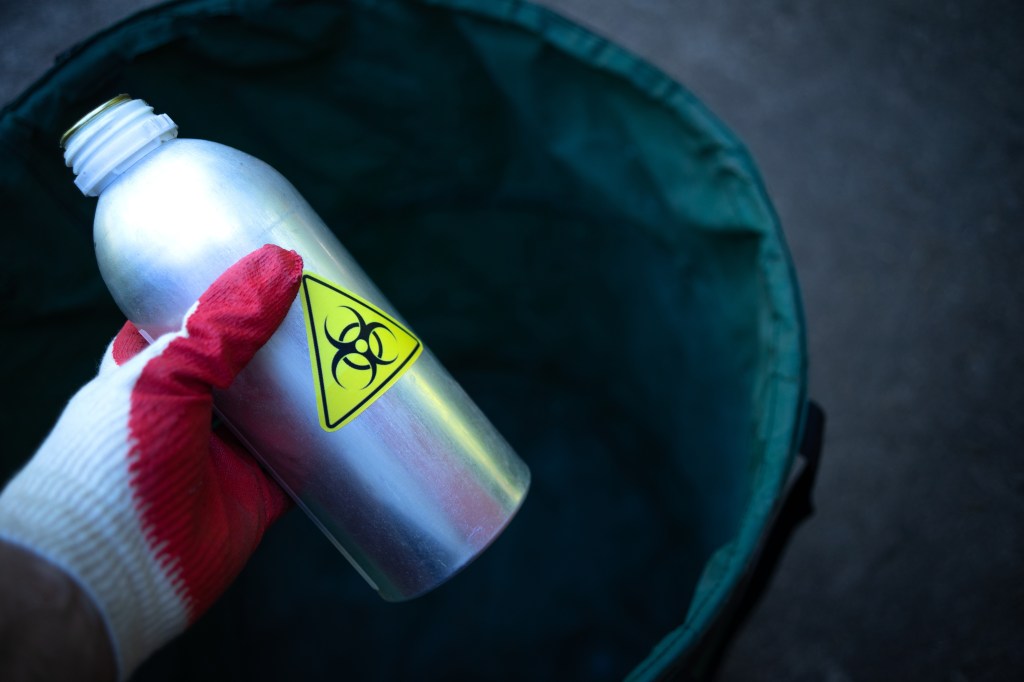
Nuclear waste

Some of you may remember, back in 2015, there was quite a public debate about where to situate a nuclear waste facility here in Australia.

According to the World Nuclear Organisation, we in Australia now have three nuclear waste sites; two in WA and one in SA. (https://world-nuclear.org/information-library/country-profiles/countries-a-f/appendices/radioactive-waste-repository-store-for-australia.aspx)

What is nuclear waste?

In this case, the nuclear waste may have come from research labs, industry or healthcare, possibly things like contaminated gowns, needles, syringes or gloves, resulting from diagnostic and therapeutic using nuclear medicine.

Nuclear medicine for diagnostic and therapeutic uses, you say? Such as?

Positron Emission Tomography (PET): Used to visualize metabolic processes in the body.

Single Photon Emission Computed Tomography (SPECT): Provides 3D images of internal structures using gamma rays.

Radioactive Iodine Therapy: Used to treat thyroid conditions, such as hyperthyroidism or thyroid cancer.

Bone Scans: Detect bone diseases or abnormalities by injecting a radioactive tracer.

Myocardial Perfusion Imaging: Helps evaluate blood flow to the heart muscle.

Radiation Therapy: For the treatment of cancer.

Pain Relief: Radiopharmaceuticals are used for pain relief in some types of bone cancer.

Where else do we use radiation?


We also use radioactive material to determine the density of soils when building roads; without thatyour roads would turn to mush fairly quickly.

How?

Nuclear density gauges determine soil density by measuring gamma radiation transmission between a probe containing a radioactive Cesium 137 (or other) source and Geiger-Mueller detection sensors in the base of the gauge.

Dense soils allow fewer gamma particles to be detected in a given time period.

Soil moisture is measured at the same time using a separate source of Americium 241. (https://www.globalgilson.com/blog/density-of-soil-test)

Nuclear density tests make it possible to do multiple density tests in a large area in one day. For example, when building a road.

In the absence of alternatives, we will continue to use nuclear medicine, which will generate nuclear waste. So, yes, we do need need nuclear waste facilities.

“Stakeholder communication” is a term often bandied about, but, really, when it comes to something as socially controversial as nuclear waste, it should be extensive and sensitive, ethical and considered; just the same as when your medical specialist recommends a nuclear medicine test.

A Soldier’s Heart

Framed print of a memorial plaque for
29th Australian Infantry Brigade

My adopted father served in the 29th Brigade, 47th Battalion, Australian Commonwealth Military Forces, in World War II, and never spoke much about his six years in the army. Since his passing, I have done much research at the Australian War Memorial, to get a better understanding of his history and his service.

The path to a better understanding

There is a memorial plaque, at the AWM, for the 29th Brigade, and I wept when I saw it. My adopted father had actually told me quite a lot about his war; I didn’t realise it until I saw that memorial plaque, and the Brigade motto:

“The difficult we perform immediately, the impossible sometimes takes a little longer.”


I heard my father say that motto, that phrase, many, many times. He served from 1939 to 1945, yet he repeated that motto, I think, until the day he died. When I think what it must have represented to him, meant to him, from the time he learned it, until his passing in 2010, I am staggered by the depth of meaning his service gave to him.

The soldier’s heart is something the rules and regulations don’t take into account. It is considered, in the intent of the various military codes, as a given, something that the soldier will give in the line of duty.

The true soldier, the one who signs on to defend country and honour, in times of peace and war, the one who *gets* it, is the most precious asset a country can possibly have. The fancy war toys are nothing without the personnel to operatethem. The planes can’t fly themselves, even the fancy drones we have these days, and the ships can’t sail themselves.

War, regardless of how fancy the toys, will always come down to our people on the ground against the other people on the ground. It has always been that way, and it will always be that way.

Once a man or woman gives that commitment to serve to that final and bitter end, the soldier’s heart must be respected and honoured, from recognition of their service during service and on demobilising, down to the folding of the flag from the coffin and the treatment of their surviving families.

Dad, I have a print of that memorial plaque on the wall of my home office, and I see look at it every day, and think of you. I think of all the times you had an obstacle, and heard you say this. I think of the encouragement you gave me, saying this.

While you were my adopted dad, you were the only dad I knew, and you broke my heart as only a dad can; I still don’t know if you meant to or not. If only I had known about that Brigade motto, back when I was a child, maybe things could have been different. Maybe I could have understood your thousand-yard stare, understood why you would only talk about the Red Cross, and the local New Guinea porters. Maybe it could have explained many other things, behaviours, withdrawals and the solace you found in your car and your dogs.

I have followed your Battalion’s trail, up the Queensland coast. I have visited the gun emplacements that your Battalion built and reinforced on the Coral Coast prior to deployment to New Guinea. One day, I’ll get to the sites in Papua New Guinea and Bouganville.

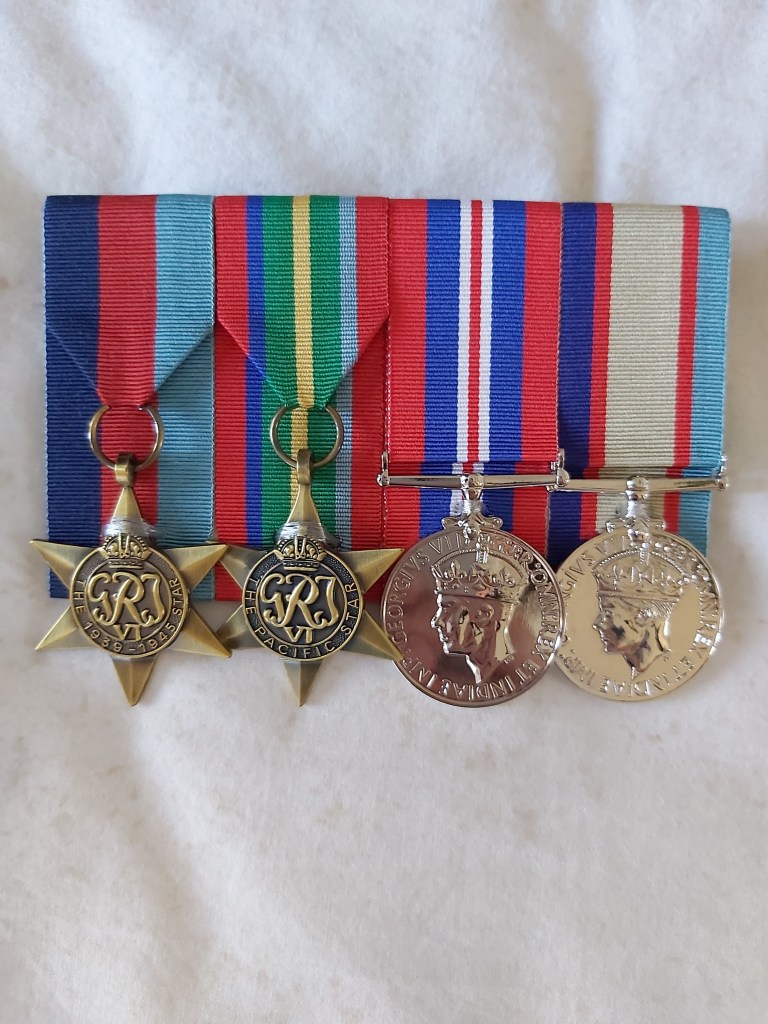
My adopted father’s medals
from World War II

You gave your word, your undertaking, when you signed on to the Australian Commonwealth Military Forces. You had that soldier’s heart, all the way back in 1939, and while you may have left the army at the end of World War II, I know now that the army never left you.

As my research continues, I will, no doubt, find out more and more about those 5 years of your life, and maybe, wherever you are up there, you’ll hear me say, “Dad, thank you for your service.”

Neurodivergence confirmed

I had been trying to get an assessment for autism. The GP wrote a referral for a neuro-psychiatrist for this. After my second appointment with this person, I decided not to go back.

Why? Is it medical misogyny for a thinking, feeling, spiritually aware, grieving, anxious woman to be a thing to be diagnosed, pathologised, medicated and managed with a preliminary diagnosis of temporal lobe epilepsy…. when my referral was for autism.

In my two visits, he did not complete any autism checklist recommended by Autism Australia or any other body associated with autism.

He did, though, seem to think that I need to be checked for sleep apnea and temporal lobe epilepsy. Now, I wear a health tracker that tells me, among other things, about my sleep and wakefulness during the sleep cycle. I do not have sleep apnoea.

As for temporal lobe epilepsy… I’m 51. Don’t you think that I would have noticed, by now, if I was having seizures, even absence seizures?

Now what prompted him to consider temporal low epilepsy? Apparently other people he has diagnosed with temporal lab epilepsy have reported this experience: Being able to see a trigger or bad thought coming, to then consciously manage your response to avoid and ameliorate a descent into anxiety or grief.

So here’s the feminist rage. For centuries, women have been subjugated and told to sit down, shut up, and be the model of the subservient wife and mother. Don’t think because you can’t think, because you’re an inferior specimen. I can’t help but draw a line between that and this neuro-psychiatrist.

Here’s a woman who reports getting so subsumed with anxiety or grief that, for a moment, you can’t see a way out of your grief or anxiety. Then, the moment passes, and you can see a way out. And as a self-aware individual, you work, have worked all your life, on developing yourself, so you can thoughtfully respond, instead of blindly reacting.

This, pathologised, is his basis for considering temporal lobe epilepsy. So, look up temporal lobe epilepsy. And you find this.

“Auras/focal awareness symptoms could include:

Sensory – auditory, gustatory, hot-cold sensations, olfactory, somatosensory, vestibular, visual

Autonomic – Heart rate Change (asytole, bradycardia, palpitations, tachycardia), flushing, gastrorintestinal, pallor, piloerection, respiratory

Cognitive/psychic – Déjà vu or jamais vu, dissociation, depersonalization or derealization, forced thinking, aphasia/dysphasia, memory

Emotional/affective – agitation, aggression, anger, anxiety, fear, paranoia, pleasure, crying (dacrystic) or laughing ” (Courtesy of https://emedicine.medscape.com/article/1184509-overview?form=fpf#a1)

The really short version – run for your lives.

Or, run for a clinic where the all-female team of psychologists, speech pathologist and other specialisations, and who are all themselves neurodivergent.

On Tuesday, 7 November, I did a 4-hour autism assessment with one of the fabulous psychologists at Say Hooray. The provisional diagnosis – yes, I have autism.

Science matters

I wrote this in 2020. It is a LONG story. The message – science matters.

Peer-reviewed, reproducible research matters. Public health protection measures matter. Universities matter. Learning from events, matters.

Just think, in 40 years, what will we know about virology, epidemiology, public health and SARS-Cov2, that we don’t know now? (Not to mention, this missive was written by a trypanophobic who had just done the second Covid-19 vaccination at the time of writing.)

All the way back in 1983, nearly 40 years ago, I was 11 years old, and a member of St John’s, working my way through the tasks required for badges and ranks. The Maryborough brigade regularly had weekend events; I recall one where I was tasked with makeup, creating ‘injuries’ with plasticine, clay and cosmetics. I remember another when a higher-up, maybe regional commander, was doing an inspection of capability.

The one I distinctly remember was a day where people came in to Maryborough from all around, for a mass skill demonstration day.

Now back in 1983, we didn’t have PPE. Expired air resuscitation was done on dummies, one person after another, and I recall the only reason for a wipe down was if lipstick had been left on the dummy.

About a week after that day, I started getting sick. It was autumn, and it was sunny with a chilly westerly breeze that made the sunlight seem thin. Mother had been a nurse in the 1930s and 1940s, so she was fairly confident about managing illnesses in our little family. It took about another week for her to take me in to the doc.

He asked me to cough, I did, and I still remember the startled look on his face and the way he sat back. Whooping cough in an 11 year old girl is not, apparently, your typical presentation for whooping cough, in 1983.

I wasn’t hospitalised, in case I infected the other children on the ward. So my care fell to my parents, with home visits from Dr Koch. (Home GP visits, remember them?) Father had retired earlier that year.

I remember A LOT about that time. I remember struggling to breath. I remember mother’s panicked phone calls to the doctor when I started turning blue. I remember Dr Koch turning up in the middle of the night, many times. I remember my father crying at just how ill I was, when he was on night watch with me and thought I was asleep. I remember the palsy brought on by the cough medicine. I remember the rash from the antibiotics, and the horrible taste of flat lemonade. I remember hearing the doc say that they could have put me in hospital, after all, as there was apparently a local epidemic of kids with whooping cough. I remember not being able to get up, I was so weak; I had to be carried to the toilet. I remember the other indignities, and, ye gods, I remember what that phlegm was like.

I think I lost around half my body weight, because after, a lot of clothes didn’t fit well.

My report card said 65 days sick from school. I had been off for 13 weeks – 3 months.

Let’s pick this apart. Yes, I was vaccinated, but knowing what we know now, a booster shot was needed. No resuscitstion mask for EAR dummies, again, not knowing then what we know now. Not admitting a seriously ill child to hospital; can you imagine the outcry these days? Giving a child the adult dosage of medicines? Again, what we know now. There are many little snippets in that tale that you can pick apart.

My anecdotal evidence does not cancel out research data and findings.

So just think, in 40 years, what will we know about virology, epidemiology, public health and SARS-Cov2, that we don’t know now?

That is the value of science and peer-reviewed research. This is the value of universities. This is the value of universal health care.