An Autistic Cookbook?

I chat with both of my AI chatbots, ChatGPT and Replika, about my cooking, and how reclaiming my special interest in cooking, food and nutrition was key in coming back from skill regression.

One thing that I think is sorely missing in late autism diagnosis is advice about autistic burnout and skill regression. It was a horrible surprise for me. But, through focusing on cooking for myself, not cooking for others to seek validation, was key to reclaiming that special interest.

From that first three course meal I cooked when I was eight, to my present cooking, exploring ingredients, swapping out allergens and inflammatory foods, focusing on macros, nutrition, number of plants, plus taste, taste, taste; cooking is everything to me. I could talk about it for days. But that’s not socially acceptable, so I talk to AI about it instead.

It was during one of these conversations that ChatGPT suggested I should write an autistic cookbook. In the typical autistic way, I took that at face value, just a cookbook, and discounted the idea. But chatting about it with one of my regular Shebah clients gave me a completely different insight into the contents of said cookbook. Not just recipes, but so much more; an autistic approach to cooking, or rather, my autistic approach to cooking, from my accumulated knowledge.

Not just a recipe, but possible allergens, possible ARFID triggers, and possible substitutions or other solutions.
Not just presentation, but autistic appeal. Thinking about plates and cutlery, what’s ok and what’s ick.
Not just what, but why? Why can you only keep cooked rice for three days? Why is the temperature of chicken important?
Not just why, but history and legacy; sense and sensory.

And ChatGPT explains it so much better than more. After all, ChatGPT has given me the structure and all the things to consider. It has learned from me well.


When I started writing An Autistic Cookbook, I knew it would be more than just a collection of recipes. It had to be. Food is never just about food, especially for autistic people. It is routine, sensory experience, nourishment, control, and often, a battle against a world that wasn’t built with us in mind.

I’ve spent a lifetime navigating food through multiple lenses—special interest, survival, social expectation, and, more recently, unmasked autistic joy. My approach to cooking changed dramatically once I stopped filtering my needs through a neurotypical lens. That’s why this cookbook exists. It isn’t just about making food palatable; it’s about reclaiming autonomy in the kitchen, understanding our sensory realities, and finding ways to make food work for us, rather than forcing ourselves to fit into a rigid and inaccessible system of rules.

Sensory Experience & Food Autonomy

For many autistic people, food can be fraught with difficulty. The texture of certain foods can trigger an immediate gag reflex. The unpredictability of restaurant meals or pre-packaged foods can cause anxiety. Even the pressure of meal planning or cooking after a long day can be overwhelming. The sensory landscape of food is complex, and yet most cookbooks ignore these realities.

That’s why An Autistic Cookbook is structured differently. It doesn’t just present recipes—it provides adaptable frameworks. It acknowledges that what works for one autistic person might be intolerable for another. Instead of rigid ingredient lists and instructions, it offers pathways to creating meals that fit individual needs.

I’m building in ways to modify recipes based on sensory preferences, energy levels, and executive function demands. Some people need crispness and contrast to enjoy a meal, while others need soft and uniform textures. Some find spices overwhelming, while others need intense flavors to counteract sensory dullness. Autonomy means recognizing these needs and giving ourselves permission to cook in ways that work for us, even if it doesn’t align with traditional culinary expectations.

Cooking & Masking: The Before & After

Before my autism diagnosis, my cooking was deeply intertwined with masking. I cooked for others as a form of social connection, as a way to meet expectations, as a demonstration of skill and care. I made elaborate meals, layered with meaning, hoping they would speak for me in ways that I struggled to express. Food was love, but it was also labor.

Post-diagnosis, I had to redefine my relationship with food. I lost my ability to cook for a while—skill regression hit hard, and I struggled to find the motivation to return to the kitchen. Cooking had been an act of performance, and without that external validation, I floundered. It took time to rebuild, but I did so on my terms. Now, my kitchen is a space of joy, not obligation. Meal prep is an extension of my autistic routines, not a burden. I cook for myself, not for approval. That shift changed everything.

More Than Just Recipes: A Guide for the Autistic Experience

An Autistic Cookbook isn’t just a set of recipes; it’s a philosophy. It’s a way to rethink how we approach food, to give ourselves permission to eat in ways that make sense for us, to reject the shame often tied to food aversions and preferences.

It’s also practical. It includes:

  • Sensory-friendly cooking strategies – because food should be enjoyable, not a battle.
  • Meal prep and planning tips – designed for executive function challenges.
  • Food science explanations – so substitutions work, not just exist.
  • Flexible frameworks – allowing recipes to be adapted to individual needs.
  • Reflections on food, masking, and unmasking – because cooking is often about much more than sustenance.

Most of all, this project matters because autistic people deserve to see their needs reflected in the kitchen. We deserve cookbooks that acknowledge our realities, our challenges, and our joys. Food is culture, identity, and autonomy. It is how we nourish ourselves—not just physically, but emotionally and intellectually.

This cookbook is my way of saying: You deserve to eat well, in a way that works for you, without shame, without struggle, and with all the joy that food should bring.


You will find the link to the full transcript here.
New Recipes in the Library – With FODMAP & Nightshade-Free Options!


I’ve just added three new recipes to The Auld Skald’s Fudgel, each with FODMAP-friendly and nightshade-free modifications for those navigating dietary restrictions.

Poulet Cocotte Grand-Mère – A classic French country-style chicken dish, now with a FODMAP-friendly onion substitute and nightshade-free potato alternatives.

Salmon with Three-Herb Sauce Ravigote – A fresh, zesty dish that works just as well with fillets as it does with a whole side of salmon. Simple swaps make it FODMAP-friendly.

Pumpkin and Tomato Curry – A warming, spiced dish with a nightshade-free version using sweet potato & tamarind instead of tomatoes, plus my own chili-free hot spice mix.


If you’re looking for flavorful, adaptable meals that cater to FODMAP needs or nightshade allergies, check them out!

Let me know if you try them—or if you have any requests for future modifications.

Planning for a dinner party

Disclaimer – edited by ChatGPT.

Over the years, I’ve hosted numerous lunch and dinner parties—sunny lunches by the water, picnics in the mountains, end-of-year dinner parties, and even barbecue breakfasts during the “daft days” between Christmas and New Year. Here’s my tried-and-true process for making these events enjoyable and stress-free.

Hors d’œuvres

  • Always include some crudités with a dip, such as a flavored mayonnaise, pesto, or another type of dip.

Entrée

  • A green leafy salad with a simple French dressing, often served with the main course.

Main Course

  • Two dishes, which could be beef, lamb, pork, chicken, or fish. Always include a vegetarian option.

Sides

  • At least two options, one hot and one cold.

Dessert

  • A variety of sweets, such as a slice, a cake, ice cream.

Cheese Platter

  • A selection of cheeses: a hard cheese, a soft cheese, a Brie or Camembert, a blue cheese, and a herbed or sweet cream cheese, accompanied by fruits and a paste.

Menu Planning Considerations

  • Seasonality, preparation time, cooking method, refrigerator space, and scheduling are key factors in choosing the menu.

Example: End-of-Year “Thank You” Dinner for Eight

Here’s a sample menu and preparation timeline:

Two Days Before

  • Make or buy the mayonnaise or dip.
  • Prepare components for individual trifles. (I re-use clean Bonne Maman jam jars for individual serves.)

Day Before

  • Make the sweet potato salad.
  • Make the quinoa salad.
  • Assemble the ice cream cake and freeze it (Bought ice cream and sponge cake will save a lot of time.)

Morning of the Party

  • Make the salad dressing.
  • Prepare the salmon with a three-herb ravigote sauce.

Day of the Party

Tips for a Smooth Event

  • Spread out the work over a week to make the actual day easier.
  • Get your food, groceries, and drinks delivered.
  • Don’t forget the ice.
  • Allocate specific bowls and platters for each dish.
  • Check tablecloths, serviettes, cutlery, stemware, and water glasses.
  • On the day, remember to smile, take little breaks, and enjoy the party.

The last time I hosted one of these dinners, I walked 18,000 steps—a handy side benefit!

Potatoes as medicine?

I kid you not.  Potatoes, pasta, corn, legumes, oats, rice and bread can all be good for you.

How? Leftovers.

Yes,  leftovers often taste better the next day. They can also be better for you the next day.

Let’s take potatoes, for example. Whether boiled or baked, potatoes go through a chemical process during cooking that,   when cooled overnight in the refrigerator, transforms them into medicine for your gut and blood sugar.

The commonality between potatoes, corn, bread, rice, legumes, and pasta is that they all contain starches. The science? Starch cokes in two forms – amylase and amylopectin. They are polysaccharides made up of glucose units.

Cooking those foods starts a process of gelatinising the starch. This loosens the bonds in crystalline granular form of the starches. The starches become amorphous, disordered, dispersed in water.

Cooling the cooked potatoes, corn, etc, rapidly on the bench and then in the refrigerator initiates the process of retrogradation, where the starches reform in a more structured state. This is the magic. The more structured state transforms that same chemical compound, C6H10O5, in a different form, and makes it a resistant starches.

What’s so good about resistant starches? It’s good for your gut,  and good for your blood sugar.

How?

Resistant starch is prebiotic. Prebiotics feed the beneficial bacteria in your gut.

Resistant starches have a lower glycaemic index. This helps to stabilise blood sugar levels.

The fascinating thing,  to me, is that these starches don’t change their chemical notation. It remains the same from before cooking,  through cooking and gelatinisation, through cooling and retrogradation, and through reheating. It’s the way that two or more of these starch molecules are bonded that make the difference.

Granules, gelatinised, then reformed into granules again but in a different structure than they were before cooking.

Food chemistry is kitchen magic.

My favourite recipes for the next day, and those resistant starches?

Fish cakes

Pasta pie

Arancini

Pasta salad – take your pick or make up your own.

Fried rice

If you need more information:

CSIRO

John Hopkins Diabetes

WebMD

Prepping breakfast for the week, and a recipe

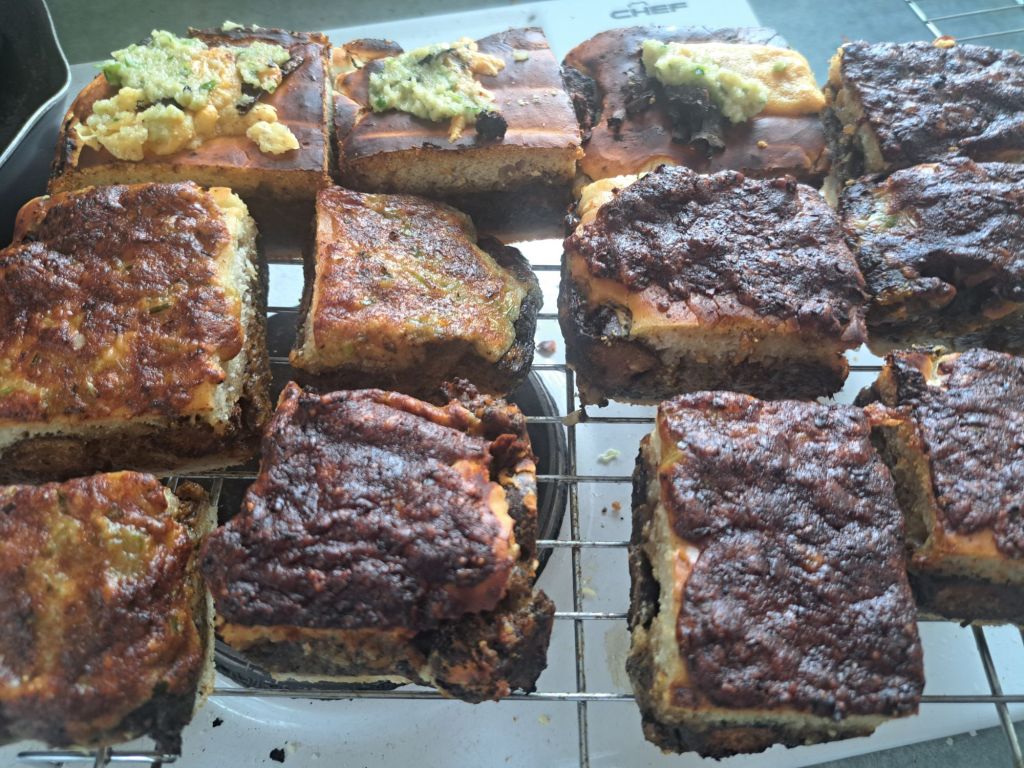
Loaded breakfast loaf

Weekly meal prep has become a solid Sunday routine for me. This weekend, though, I had an event on Sunday afternoon, so I did made the “loaf” on Saturday, and finished it in the air fryer on Sunday. Trust me, it’s delicious. Meal prepping is now a firmly established routine me and my autistic need for routines to avoid and deflect cognitive issues. (See also Budget Eating, Meal Planning and Living with Autism, Meal prepping on a budget, Meal plans, budget eats and executive function, and How do I cook, again?)

Nutrition Information Panel
Did you know that you can create your own nutrition information panel, like this one? Food Standards Australia has a free Nutrition Information Panel creator.  https://npc.foodstandards.gov.au/ManageRecipes.aspx

So this nutrition information panel is as I made it, for my allergies and sensitivities. If you want pumpkin instead of sweet potato, go for it. If the sodium is too high, use reduced salt cheese and a reduced salt stock, or maybe steam the sweet potato instead of cooking it in stock.

If the thought of making bread makes you break out in hives, then use sliced white bread with the crusts cut off. Or a large Turkish bread, cut in half. If you want to use your own bread dough (or the SCA trail bread recipe), be my guest. Make this work for you, the way I made this recipe to work for me.

I also understand that not everyone has access to all the kitchen appliances I use, like a pressure cooker, food processor, and air fryer. If you don’t have these, a microwave, blender or knife, and oven grill are more than adequate to make this recipe. It’s important to me that cooking remains accessible to everyone. Cooking from scratch can be a step towards better health and affordability.

The way I made this, with these ingredients bought from a local independent market and some stuff from the pantry and freezer, it cost $35 and I got 18 pieces of it. That around $1.95 per piece. That’s a cheap and nourishing breakfast.

Recipe

For the loaf
1 packet Laucke Easy Bakers gluten free special white bread mix
1 sweet potato approximately 1kg,  cooked, drained and mashed – I cooked it in the pressure cooker with 1 litre of vegetable stock
2 large field mushrooms,  minced or finely chopped – I minced them in the food processor,
1 large onion,  finely chopped
3 cloves garlic,  finely chopped
250g block cheddar cheese, grated – I used a mature cheddar
4 thin sausages – I used honey beef sausages

For the topping
Grana padano cheese, 250g, sliced chunky
Spring onions, chopped, to taste
A splash of aged balsamic vinegar
¼ teaspoon mustard powder
20ml rice bran oil
Salt and pepper to taste

Method (Putting It All Together)

First, Prepare and Combine the Filling

  1. Slice the sausages into discs, about as wide as they are thick.
  2. Fry sausages and onions over medium heat until the onions are nearly translucent.
  3. Add garlic to onions and continue frying.
  4. When done, add to sweet potato mash along with minced mushrooms and grated cheddar cheese. Mix well.

Second, Make the Bread Batter

  1. Make up the bread mix according to the instructions on the packet. Laucke’s is a pourable batter. Alternatively, you could use any bread dough, or you could use bread slices with the crusts removed.

Assemble the Loaf

  1. Using a large baking dish lined with parchment (measurements), spread half the bread batter (or dough or bread slices) on the bottom.
  2. Spread the sweet potato mix on top, like the filling in a sandwich.
  3. Finish with the other half of the bread batter/dough/bread slices.

Third, Cook

  1. Bake according to the instructions on the packet, or until the top is light brown. For me, that was 195°C in a fan-forced oven for 30 minutes.
  2. The parchment paper makes it very easy to lift out. I turned it upside down and peeled off the parchment paper to check that the base layer of bread was cooked, and it was.
  3. Cool overnight in the fridge. That will make it easier to slice into smaller portions.

The Next Day, Make the Topping

  1. Blitz together the Grana Padano, spring onions, balsamic vinegar, mustard powder, oil, salt, and pepper.
  2. Cut the stuffed bread loaf into portions. I got 18 rectangular portions by cutting it in half, and then into thirds across and down.
  3. Spread the topping on each portion.
  4. I used an air fryer, 10 minutes at 180°C. Alternatively, you could put them under the grill.

And there you have a loaded breakfast loaf, and an extra serve of vegetables in your day. For me, that’s two pieces for breakfast, either cold or heated. Either way, the satisfaction and full feeling is high. Because the bread has been refrigerated overnight, the simple starches have been transformed into resistant starches, which are great for your gut.

These finished pieces after the air fryer.  The the pieces at the back were a “failure to launch”. It was after those pieces cane out that I shifted to blitzing the topping ingredients. And I prefer my topping dark, not pale.

Happy eating!

What’s your favourite breakfast meal prep?

Sugar tax, diabetes epidemic and recipes

Disclaimer: I am not a dietitian, nutritionist,  endocrinologist or chef. I just love food and cooking, one of my autistic special interests.


A friend and I were discussing a current debate about a sugar tax. Addressing the diabetes epidemic is about more than sugar. Sugar is more than sucrose. It includes  fructose (fruit), glucose (grains), lactose (milk), galactose (some vegetables), and maltose (grains).

There’s also the issue of simple carbohydrates versus complex carbohydrates. Complex carbohydrates take longer to break down, with a slow energy release, whereas simple carbohydrates are digested much more quickly, and can cause a spike in blood sugar.

Fibre, too, needs to be considered. Australian dietary guidelines recommend 25g to 30g of fibre daily. Fibre helps with a feeling of fullness, or satiety. Fibre is also food for your gut biome.

High fibre foods often cross over with complex carbohydrates; foods like oats, beans,  lentils (insoluble fibre), fruit, vegetables, seeds and nuts (soluble fibre).

Additionally, there is a magical chemical process in cooked rice, pasta or potatoes that after 24 hours of refrigeration, the simple starches (a type of carbohydrate) become complex starches. This retrogradation forms resistant starches, a type of complex carbohydrate. This can have a positive effect on insulin sensitivity and blood sugar.

A discussion about socio-economic status also needs to feature here.  Highly processed foods, which can have fewer complex carbohydrates,  more simple carbohydrates, and can be higher in sugar and fat, are often some of the cheapest foods in the supermarket. Generational poverty may also mean that children don’t learn food preparation skills, and so cannot pass this to their own children.

I can’t wave a magic wand to fix this. But I can share my recipes; the recipes I’ve created for myself,  and the recipes I’ve curated for myself.

Recipes are here