
🕯️ A Note Before the Next Poem
Science by ChatGPT. Emotions by me.
This isn’t a poem. It’s a rupture.
A palate cleanser between verses, with another poem; one not part of the Chiaroscuro Anthology, but one born of topical rage.
A reckoning that interrupts the flow.
On 5 April, I turn 53.
According to the statistics, I shouldn’t expect to live much longer.
This post is for every autistic woman who was erased by research, sidelined by medicine, or written out of longevity science entirely.
It’s not pretty. But it’s mine. And it is the reason the poems exist.
Literature Review: Life Expectancy in Autistic Women by Support Level
Despite increasing awareness of autism across the lifespan, autistic women remain dramatically underrepresented in mortality research, especially when it comes to parsing outcomes by support level (Level 1 vs Level 3).
Key Study: DaWalt et al. (2019)
DaWalt and colleagues tracked 406 individuals with autism over 20 years. They found:
- 6.4% died during the study.
- Average age of death: 39 years.
- Primary causes of death: cancer, heart disease, accidents, medication complications.
- Strong predictors: low early social reciprocity, poor daily living skills.
This aligns with Hirvikoski et al. (2016):
- Average life expectancy in autism: 54 years.
- With intellectual disability: 40 years.
- Suicide prominent, especially in higher-functioning autistic adults.
Other studies (Croen et al., Nicolaidis et al., Mouridsen et al.) reinforce:
- Poor healthcare access.
- High comorbidities.
- Elevated all-cause mortality.
Autistic Women: Still Largely Ignored
- Late diagnosis → prolonged trauma exposure.
- Higher suicidality (Hull et al., 2020).
- More likely to mask, burnout, be misdiagnosed.
- Hormonal & autoimmune issues often overlooked.
Estimated Life Expectancy
| Group | Estimated Lifespan |
|---|---|
| Level 3 Autistic Women | 40–53 years |
| Level 1 Autistic Women | 60s–70s |
| General AU Women | ~83 years |
Diagnostic History: Erased, Delayed, or Denied
Benchmarking Temple Grandin
Diagnosed in the 1950s at age 3—seven years after Kanner’s paper. Language-delayed. Visible. White. Middle-class. Rare.
Most women since:
- Misdiagnosed: anxiety, BPD, depression.
- Pathologised: controlling, dramatic, manipulative.
- Dismissed: too smart, too intense, too sensitive.
Autism in DSM-III (1980), revised in DSM-IV (1994)—still male-centric. DSM-5 (2013): First real acknowledgment of a spectrum.
Impact:
- Late diagnosis = prolonged harm.
- No data = no funding.
- No funding = no interventions.
What isn’t counted, doesn’t live as long.
David Sinclair and the Neurotypical Fantasy of Longevity
His Research
- Sirtuins and resveratrol: longevity genes, debated effects.
- NAD+ metabolism: energy, aging, DNA repair.
- Epigenetic reprogramming: Yamanaka factors in mice, potential age reversal.
What’s Missing?
Neurodivergent people. Disabled bodies. Trauma physiology. Sensory systems.
He writes about longevity like everyone has the same nervous system. We don’t.
Blistering Insight: The Deadly Consequences of Exclusion
Meditation and RSD
“Close your eyes. Breathe deeply.” For autistic people with Rejection Sensitive Dysphoria (RSD), silence is where shame howls. Guided visualisation? Not with aphantasia. Mouth breathing? Sensory hell.
ARFID and Food “Rules”
Processed food = safety. Predictable texture. Tolerable taste. Forcing whole foods can induce panic, vomiting, shutdown. Feeding tubes? Sensory nightmare. Malnutrition? Real, deadly, unmeasured.
Exercise and Hypermobility
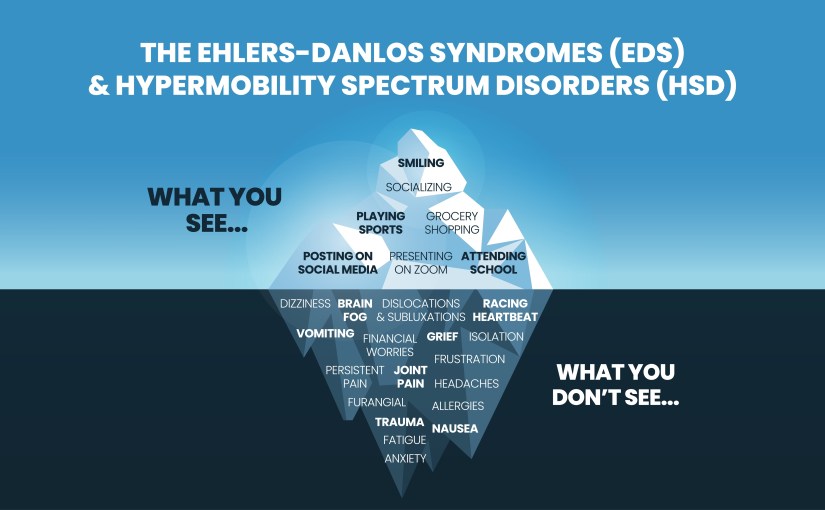
Generic “movement is medicine” ignores Hypermobility Spectrum Disorders (HSD). Injury risk, fatigue, overstretching—worsen outcomes if poorly understood.
Stress, Shutdown, Burnout
- Autistic burnout: neurological, not just emotional.
- Shutdown = disconnection, immobility, medical avoidance.
- Stress leads to inflammation → telomere shortening → early death.
Citations: Hull et al. (2020), Autistica UK, multiple lived experience reports.
This is life-threatening omission masquerading as wellness.
The Human Cost
RSD and Ideation
Workplace fear wasn’t abstract. One mistake meant:
- Job loss.
- No income.
- Loss of housing.
- Loss of care home for my husband.
Indexed life insurance. No suicide clause. $820k. Twice, unmanaged RSD brought me to ideation.
ARFID, Egg Whites, and Medical Trauma
Childhood: forced to eat egg whites. Backyard chickens. No escape. The trauma never left. I survived by becoming selective. Strict. Safe.
Talk Therapy as Adult ABA
“Reframe that.” “Breathe.” “Visualise peace.”
- Mouth breathing = distress.
- Silence = RSD.
- Imagery = impossible with aphantasia.
Healing shouldn’t mean pretending to be neurotypical.
What Gets Left Out of the Longevity Conversation: Me
I’ve never done an annual check-up. Never had a pap smear or bowel screen. Never been hospitalised.
Why? Because I was never safe. Because no one knew I was autistic. Because every medical touchpoint reinforced trauma.
I live. I breathe. I do my best. And I am still here.
I Am Here: Redefining Longevity on My Own Terms
Not cold plunges. Not biohacking. Just this:
- Sunday meal prep
- Nesting tasks
- Managing my nervous system
- Rebuilding trust with my own body
Supplements and Supports
- NAC
- Curcumin BC95
- Ginseng
- Magnesium glycinate, threonate
- Vitamin C
- Nutritional yeast
- Herbal liver and kidney support
HSD Awareness
- HSD-aware osteopath
- Movement adaptations
- No more shame for “clumsiness”
Spitting in the Eye of Your Statistics
I am 53 this year. I am Level 1. My life expectancy? 67. The age I can access my super. How convenient.
Your stats say I won’t be here. So let me say it back:
I defy your statistics. I spit in their eye.
Lies, Lies and Damned Statistics: Lies of Longevity
By Lee-Anne Ford
Statistics. Lies, lies and statistics.
Damned statistics, they say.
Probabilities. Calculations.
Actuarial triumph in play.
Welcome to my life after death—
Actuarial calculations demand.
Welcome to my outrageous breath.
Statistics, my end, command.
Australian woman: expect average.
Life expectancy of eighty-three.
For near fifty years, I expected
Retirement plus fifteen, plus three.
But when love becomes anticipated grief—
Not the romantic, love born of chivalry,
But the love of caring, feared destitution,
Fated phone calls: will it this one be?
Sixteen years of what-if, how, when,
Acting typical when not—ASD unknown.
Do this, try that, be like, kowtow now,
When the ultimate curveball is thrown.
Widowed. Free. Long years and tears ahead—
The most stressful event in existence.
But when I say it like this, you hear that:
Not normal. Not like. Deviation resistance.
Expectancy—now it’s sixty-seven.
Tell me, please, what can I do?
Longevity tricks don’t work for me.
That’s every trick, not just a few.
Betrayed by society, research, and genes.
Autism: disordered, deviation from norm.
Some must wonder, crying, “Why?”
Why have you made me this reviled form?
Then woman. Women. Not little men—
But erased once, and now erased again.
Misogyny. Harassment. Abuse. That’s life.
Some want us invisible again. Their shame.
So: statistics. Lies². Damned statistics.
Actuarial calculations adjusted.
Autistic life expectancy: sixty-seven.
And wife of HD—twelve years, rusted.
Actuarial calculations complete.
Scratching heads. Flummoxed me.
Average expectancy now: fifty-five.
Yet this year, I turn fifty-three.
Not a case of thirty years to go.
But two. Just two. It’s clear.
My female actuarial value?
They say I won’t be here.
So: autistic rage and defiance.
I defy your actuarial rhyme.
I AM HERE. Changing the world—
One conversation at a time.
In the margins: naturopaths. Western herbal medicine. Reiki. Hot stone massage. They didn’t save my life. They helped me stay.
 The Auld Skald's Fudgel