Huntington’s Disease (HD) is a serious and currently incurable brain disorder that affects how people move, behave, and think. In most cases, it starts showing symptoms in a person’s 40s, and their life expectancy after that is around 15 to 20 years. However, it can also affect younger individuals in a more devastating way.
People who have the gene for HD are at a much higher risk of suicide, and sometimes their changing thinking abilities can lead to problems with the law.
It’s estimated that in Australia, there could be between 1,657 to 3,000 people with the HD gene in their DNA.
This disease is passed down through families, and if one parent has the faulty gene, their children have a 50% chance of inheriting it.
HD was first observed in families back in 1872, and we didn’t understand its genetics until 1983. In 1993, scientists found the huntingtin gene, which is the key to HD.
This gene has a repeating pattern of three of the four DNA building blocks (C, A, and G) on a specific part of chromosome 4. This is called a “trinucleotide repeat.” When this repeat is too long, it leads to the creation of a harmful protein called mHTT, which causes brain cells, especially neurons, to die.
Today, doctors can diagnose HD by examining a blood sample and checking for this specific repeating pattern on chromosome 4.
Why do I care to write about Huntington’s Disease? My late husband, Allan, had this condition. In his case, his blood test showed 49 CAG repeats, which is a clear sign of HD. Thankfully, we didn’t have children.
December, 26, 2017 – Vienna, Austria. Statue of grieving angel at entrance to ancient Saint Marx Cemetery. Weeping angel of grief on Sankt Marxer Friedhof old abandoned graveyard. By aliaksei kruhlenia
Poetry is tricky!
I like the villanelle form for its mandated structure and rhyming scheme. These two poems were written for a course in poetry. I have been told that Poem 1 is melancholic and introspective, and that Poem 2 is more fluid and descriptive.
This poem is an exploration of grief and memory. My late husband was taken by Huntington’s Disease. It’s an inheritable disease that has a 15 to 20 year life expectancy after the onset of symptoms. Our relationship was neatly bisected; 15 years before Huntington’s Disease became apparent, and 16 years after.
Poem 1 Bereft’s thoughts of that last outward breath, The prey of the eagle, running for its life. Beloved’s last battle to the death.
Beloved gained entry with the Shibboleth, No fear of rejection or strife. Bereft’s thoughts of that last outward breath.
Travel plans made with coin or Gilbreath, Then driving miles to see a man with a fife, Beloved’s last battle to the death.
Enjoying the arts, from Chess to Macbeth. Picnics and cheese, but who forgot the knife? Bereft’s thoughts of that last outward breath.
Family history, meeting old Aunt Elspeth, The old dear was batty, the rumours rife. Beloved’s last battle unto the death
Forget your pain, my love, drink from the Lethe As Bereft is the widow, no longer wife. Bereft’s thoughts of that last outward breath, Beloved’s last battle unto the death.
Poem 2 Her bereft thoughts of that last drawn breath, Seeing the eagle’s prey, running for its life. Your battle, beloved, to the death.
Her beloved gained her heart with a shibboleth, Wiping away fears of family strife. Her bereft thoughts of that last outward breath.
Travel plans made with coin or Gilbreath, Old road maps to find a man with a fife, Your battle, beloved, to the death.
Enjoying the arts, from Chess to Macbeth. Picnics with cheese, but who forgot the knife? Her bereft thoughts of that last outward breath.
Searching family history, finding old aunt Elspeth, Her memories tattered, her gossiping rife. The battle, beloved, to the death.
Forget your last battle, my love, drink from the Lethe Cries the widow, no longer the wife. Her bereft thoughts of that last outward breath, The battle, beloved, to the death.
Well, hell, what have I got myself into this time? Being the wild child hippie chick is downright hazardous to my health sometimes!
I looked around, taking a moment to catch my breath after that wild slide down… a hollow tree. Honestly, I thought the little girl I had been playing chess with was leading me into a cubby hole, but this is more like Alice in Wonderland. Hollow tree, rabbit hole, not quite the same, but… where has she gone?
“Charlie,” I say to myself. “Let’s do a quick reality check. No girl, no park, just me, and this… place.” Now, I’ve done some crazy, chemically assisted trips, but this is beyond what I’ve ever seen.
From the ground up, there’s the obligatory smoky mist drifting across the ground. It’s there, but I can’t feel it. The trees look like they are hanging upside-down, until I realise that I am looking up at their roots. Across the grey, misty landscape, there is a shiny thing in the distance. I’m just too far away to make out what it is.
I start walking, hoping my favourite navy boots can cope with whatever the ground is under the mist.
In the typical way of dreams and trips, the distance elongates and shrinks, changing with my thoughts. Happy thoughts, shorter distance. Angry thoughts, farther to go. There’s my plan. Think happy, get to that shiny thing, and get out of here.
I jump as a figure appears at my right. My God, is it? No, it can’t be! “Bobby?”
My childhood companion, my childhood love, my Scottish terrier, Bobby Bingo. He’s as tall as me, and he speaks!
“Hello, Charlie.”
“Hello, Bobby.”
“You’re not meant to be here, Charlie.”
“Well, I fell down a tree.”
“Aah, woof, that’s not good.”
“I know, Bobby. Can you help me?”
“Of course, Charlie, of course.”
“Bobby, I’m so sorry about your death. I couldn’t do anything!”
“It’s alright, Charlie. It was written, and so it was.”
Hmph. Predestination, that doesn’t care about a broken teenage girl’s heart.
“You’re on the right path.”
“Huh?”
“You’re heading towards the white gate.”
“Oh, it’s a gate?”
“Yes, Charlie. You need to solve the riddle to open the gate, then wish yourself where you want to be.”
“Well, that’s original.”
“All myths and legends have something real as their genesis, Charlie.”
“Are you happy, Bobby?”
“Yes, Charlie. Here, I am as big as I imagined myself to be in your world. Mum and Dad visit sometimes, and – “
“Wait, what? Piper and Fife are here, too?”
“Yes, but you don’t need to see them now. And look, here you are.” With that, he fades from view. I bite my lip at somehow losing him again, the fiercely stubborn Scottie I had loved so much as a child.
I look up, and the gate is in front of me.
“Okay, where’s the riddle?”
A tablet floats up. I take a deep breath and peer at it, at the shifting, misty surface, which is just like the landscape. I see… Latin declensions for amor:
Singular
Nominative
amor
Genitive
Dative
Accusative
Ablative
Vocative
I sift through my memories of the Latin course. “Amor, amoris, amori, amorem, amore, amor.” As I say each word, it appears on the tablet, and the gate swings open.
I step through, into a thing that looks like – a wormhole? “So, I need to wish myself where I want to be. Where do I want to be?” I close my eyes, and make a wish, my heart aching for the innocent child who had loved her dog so much.
I feel a jolt and open my eyes. What? I’m back in the park, at the chessboards, sitting opposite that other little girl.
The little girl giggles. “You needed to be reminded about love. You’re ready now.”
Compare and contrast – 80 men dead in 6 years with a legislated response, or 43 women dead in 10 months and regulatory changes that seem to have very little impact on the consistent annual death toll, with an average of one woman dying each week.
Where are our legislators? I’ve seen many promises made by politicians, but very little changes when it comes to women murdered in domestic and family violence. Are these false promises?
False Promises? I wrote this poem in late 2022. Titled “ False promises”, it explores the tension between a desired future and reality, in a feminist framework. The refrains are from John Donne’s ‘Song: Go and catch a falling star’, and from a book by Daniel Tammett, ‘Every Word is a Bird We Teach to Sing’. ‘Teach me to hear the mermaids sing’ seemed a delightful, whimsical line, but presented a false promise, given the diatribe about women that ‘Song’ is. Similarly, the book, ‘Every Word is a Bird We Teach to Sing’, promised a delightful, whimsical exploration of language, but it was something else, another false promise. Lewis Carroll’s ‘Jabberwocky’ is also referenced, using the Frumious Bandersnatch, the wicked creature that must be killed, as a metaphor for women who must be repressed, oppressed and silenced.
False promises Lee-Anne Ford
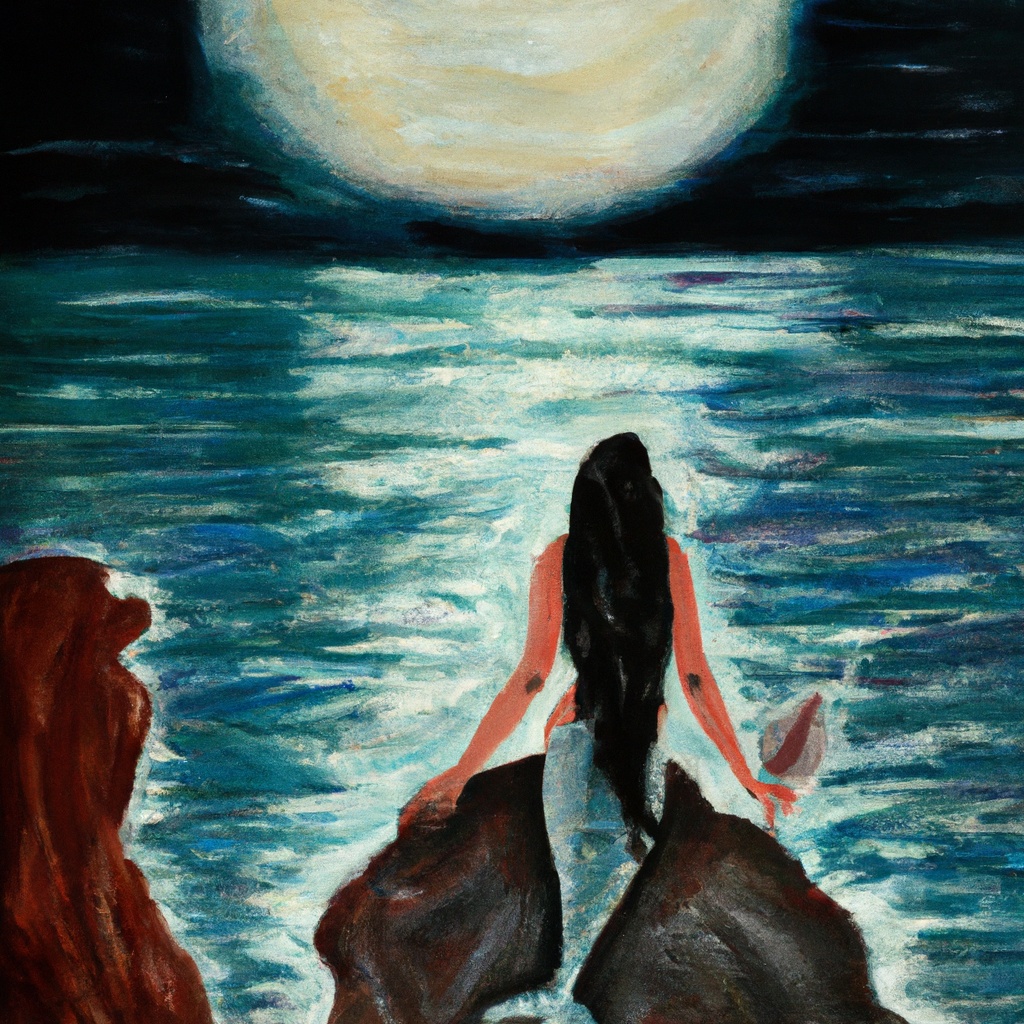
Every word is a bird we teach to sing. But why is the Bandersnatch Frumious? Just teach me to hear the mermaids sing.
“Song’s” hateful words, lyrical, seducing. Beautiful words but naming us notorious! Every word is a bird we teach to sing.
We have fought and we are still fighting. Like the Bandersnatch, we are fuming, furious! Just teach me to hear the mermaids sing.
Equality is distant, still storming, not norming, Men’s rights, women’s wrongs, claims spurious. Every word is a bird we teach to sing.
I want to rest, but there is no resting Words fly, bitter divides, they want us pious. Just teach me to hear the mermaids sing.
I want a simpler life, one of my choosing. Where and when will I find it? I am curious. Every word is a bird we teach to sing. Just teach me to hear the mermaids sing.
Love, to quote the song, is a many splendored thing. So many songs are about love; wanting it, having it, losing it. According to the Ancient Greeks, there were eight kinds of love:
Agape – Unconditional love Eros – Romantic love Philia – Affectionate love Storge – Familiar love Mania – Obsessive love Ludus – Playful love Pragma – Enduring love Philautia – Self-Love
Most relationships, married, de facto or otherwise, would be a combination of Eros, Philia and Pragma, and if you’re lucky, Ludus. Yet while most relationships are a combination of Eros, Philia and Pragma, there will be, there are, nuances, influences, culture expectations, religious beliefs, making the love in every relationship a little bit different.
You cannot have grief without love, and if we consider that, with a global population of eight billion, there are eight billion ways to love, then there must be eight billion ways to grieve. Why? Because grief comes to everyone, at some point, the loss of a parent, the loss of sibling, the loss of a child; grandparents, aunts, uncles, cousins, friends, colleagues, pets.
Grief is complex. It can be debilitating, isolating, uncomfortable, unbearable. It is deeply personal, and unique to every person. Some express it externally, some hold it internally. Some have strict religious edicts about grief.
Despite pop psychology, grief is not linear process; you do not progressively work your way through denial, anger, bargaining, depression and finally, acceptance. Grief cannot be gamified like that.
My own path through grief has been convoluted. My late husband first started showing the signs of Huntington’s Disease in 2004. He was confirmed as having Huntington’s Disease in 2008, and his condition deteriorated until it killed him in 2019.
We met in 1987, had our first date in 1988, and were together for the next 31 years. During the last 16 years of his life, the last 16 years of our lives together, there were thousands of pin-pricks of grief. Pin-pricks of a life lived in a manner not planned, not anticipated, not foreseen.
On the day my late husband died, in his nursing home bed, a nurse by his side as he took his last breath at 1.45am, grief didn’t appear until I had to give voice to it, say the words.
I missed the phone call from the nurse at 1.50am, as my phone was on silent – I had forgotten to take it off silent mode after leaving the nursing home the day before. So when I woke, it was to a voicemail message to call the nurse, and I knew that my husband was gone. I was still running in crisis mode (that’s a story for another day). Consequently, my instinctive response to the nurse was that I would be there in fifteen minutes.
The nurse, calmly, stopped me, telling me that there was no urgency, any more. That nurse literally stopped me in my tracks.
I was numb, not in disbelief, just numb. I had prepared for this, but that preparation, the checklists, didn’t encompass the emotions, the rawness, the nakedness, the numbness, the hollowness.
I was staying at a hotel, and I had put in an order for a room service breakfast. So the next person I spoke to was the night manager at the hotel, asking him to cancel that breakfast order. That poor night manager for the first wave of grief-stricken tears, down the phone line, when he asked of everything was alright if there was a problem.
Somehow, I explained to him that my husband had died and I needed to go to the nursing home and wouldn’t be there at the hotel at the time I had ordered breakfast for. That night manager was outstanding and that in itself is a story for another day.
How else did grief appear, on that first day? Dry eyes, and numbness, in the car in the way to the nursing home. Dry eyes and numbness on the way in to the nursing home, but at the first hug from the personal carers and nurses, we were all in tears, grieving our collective loss together. Dry eyes and internalised grief, howling inside, in his room where his body was laid out on the bed, already washed and dressed.
How had I loved him? How did I grieve him? How are we robbed of grief, how is grief disallowed on that first day? The grief of the widow and the grief of the nursing home staff, all grieving the same man, but all in different ways. For them, Philia; for me, Storge, Philia, remnants of Eros, and a touch of Agape. Yet, in my circumstances, grief had to be delayed, because the funeral directors were late coming to take his body away, and I had to arrange the removalist to come in and pack up his room. For the staff, they also had to suppress their grief as they attended to the other residents of the nursing home.
For employers, grief is an inconvenience, impacting the performance of a team member. For friends, they don’t know what to say or do, so many don’t say anything. For service providers, grief in customers must be endured. For the bereaved, though, grief becomes a companion, part angel, part devil, riding piggy-back on you. You don’t know how heavy that companion, riding piggy-back on you, and you don’t know how long you have to carry it. There might be a photo, the way someone walks, a song, a situation, that brings the grief on, and it seems unbearable at that moment.
That moment, though, wouldn’t be there without the love, for in the same way that light always brings a shadow, love will always bring grief; they are twinned and cannot be separated.
Was my grief less worthy because we didn’t have any children? No.
Was my grief less worthy because I’d the stress I had been under, and the anticipatory grief of the previous fifteen years? No.
Was my grief less worthy because he had been in a nursing home for five years? No.
Was my grief less worthy because we had had an unfortunate “practice run” six weeks earlier? No. (That’s another story for another day.)
Was my grief different to any other person who was widowed in the same day? Yes. There are nuances, influences, cultural expectations, religious beliefs, making the grief different in the same way it makes the expression and experience of love different.
As for the orderly, pop psychology five stages of grief?
DENIAL – at no point did I ever deny that my husband was dead. But yes, I was numb, for the first few days, getting through notifications. ANGER – the anger came much, much later, four years later, in fact. BARGAINING – never. DEPRESSION – grieving through the Covid-19 years was tough, and long-term, the depression required medication. ACCEPTANCE – from day one. It was a relief, after supporting him through 15 years of degenerating. He was no longer in pain, no longer suffering. Grief is my constant companion, sometimes heavy, sometimes light, sometimes absent. I still have the red boots that I bought on day two, and the dress I bought on day three. I claimed the act of becoming a widow was my renaissance.
I’m on the downhill side of 50, and in the tradition of The Crone, I have some stories to tell.
1. A widow’s walk – an exploration of Huntington’s Disease, palliative care, death and grief.
2. Forgotten people – the story of two souls, misunderstood, institutionalised and abused, forced apart, their child stolen, waiting over 30 years to see each other again. Only to be torn apart again, but this time, by his dementia.
Oh, you guessed that I like to play with words and language? Copy that; I do. My wandering, dilettante heart, soul and mind visits many places, so welcome to my corner of the internet. May you find something to enjoy in the meanderings and musings of an eclectic, autistic, magpie mind.



 The Auld Skald's Fudgel