Imagine a world where you have never had a choice, never had autonomy.
This is the world of my birth mother, Coralie. Born of rape, adopted out, and happy until her adopted mother died. Unhappiness began with the arrival of a stepmother, culminating in a pre-teen being committed to the psychiatric hospital. Her first relocation without consent.
She stayed in the psych hospital until late 1972, falling in love and birthing a daughter along the way. But both her lover and daughter were sent away. A dislocation without consent.
When she left the hospital—a 24-year-old mother with no child, handicapped by 14 years in a psychiatric ward, those important teenage years when you find yourself—she entered a boarding house with little to no life skills, and stayed with the family of that boarding house for 30 years, even when they moved from Toowoomba to Tallebudgera. A relocation without consent.
Meeting, once again, her lover from the hospital, marriage ensued, a departure from the boarding house. A relocation with their dissent and her consent.
Marriage, happy until his dementia brought violence. A police-assisted exit and placement in a nursing home. A relocation without consent.
Three years later, the nursing home is scheduled for demolition, no longer fit for use. Relocation to another nursing home. A relocation without consent.
And all while undiagnosed autistic, bearing the shame of growing from child to adult in an asylum.
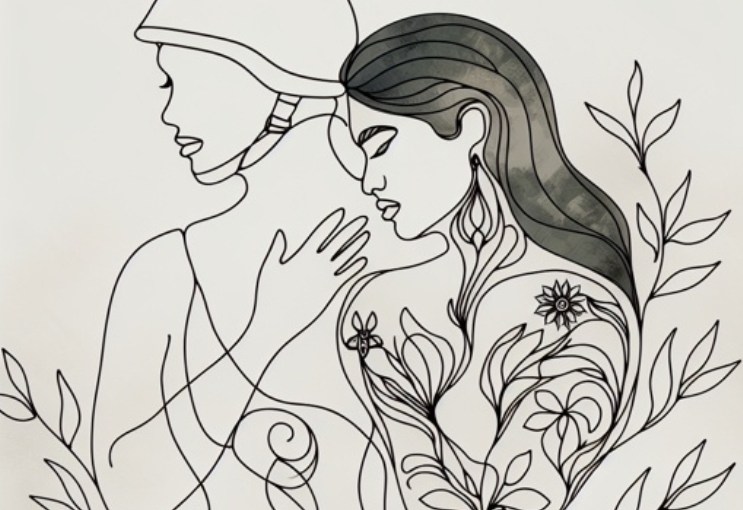
So how could I, that daughter she gave life to in 1972, knowing my own autism at last, leave her on her own? When her childhood diagnosis of childhood schizophrenia with borderline mental retardation really meant that she was autistic, too—the source code of mine—how could I not support her, mother her, in this latest unconsented relocation?
Think of all the autistic things. Change in routine, outraged sense of justice, RSD. And so much more.
So while draining, it was my privilege every step of the way, from old to new. To stay with her, for hours, as she processed; to listen to her and to let her know that yes, I am autistic, and you are, too. Just like our hair, our jawline, our noses; our autism.
And to prove her autism? Her first thought was for her half-sister: was she autistic, too? Hyperempathy and pattern recognition.
So I told her I loved my autism and the things it gave me. And I thanked her.
That was Thursday. Friday, she was better. I gave her the zebra card; we are not defective horses, we are zebras. And we cried together. For that, and for the birthday of her lost husband, my birth father. Turning 81, alone in his world of dementia.
Mothering my adopted mother was done from love and obligation, and turned to alienation and hatred.
Mothering my birth mother through yet another unconsented relocation and her grief for the husband not yet dead, was a privilege.
 The Auld Skald's Fudgel